








The global language learning market is booming. According to recent industry reports, the online language learning market is projected to surpass $25 billion by 2028, growing at a CAGR of over 18%. With AI-driven tools, mobile-first design, and soaring demand for multilingual professionals, launching a language learning website or app today is more timely and profitable than ever.
Whether you are a solo language instructor, an entrepreneur, or an organization looking to monetize educational content, this guide will walk you through everything you need to know to create a powerful, scalable, and revenue-generating language learning platform in 2026.

Why Now Is the Perfect Time
Students expect short, engaging lessons, gamification, speech recognition, instant feedback, and seamless mobile access — features that top apps like Duolingo have popularized. Your platform can stand out by targeting niches such as business English, travel conversation, exam preparation (TOEFL/IELTS), or regional language needs in Asia, Europe, or Latin America. How to Make a Language Learning Website?
Why Build a Language Learning Website?
The demand for language learning platforms continues to grow rapidly. Several factors are driving this:
- Remote work expansion: Millions of professionals now work across borders and need to communicate in multiple languages daily.
- AI and automation: AI-powered translation and tutoring tools have raised the bar for learners, pushing demand for structured learning platforms.
- Mobile learning boom: Over 70% of online learners now access courses through smartphones, making mobile-friendly platforms essential.
- Micro-credentialing: Employers increasingly look for verified language certifications, creating opportunities for platforms that offer recognized certificates.
- Multilingual content consumption: Streaming services, social media, and global brands are driving personal interest in foreign languages more than ever.
As an educator or platform owner, now is the best time to establish your presence in this growing market.
Choosing the Right Platform to Build Your Language Learning Site
Before building, you must decide which technology stack best fits your goals. Here are the most popular options:
Option 1: WordPress + Academy LMS (Recommended for All Users)
WordPress remains the world’s most popular CMS, powering over 43% of all websites. Combined with a modern LMS plugin likeAcademy LMS, it gives you complete control over your platform while keeping costs low.
Advantages:
- No coding knowledge required
- Massive plugin ecosystem
- Cost-effective — free to start
- Full ownership of your data
- Highly customizable
Best for: Solo educators, small academies, niche language schools
Option 2: Custom Development (React / Next.js + Node.js / Django Backend)
For developers or funded startups, building a custom platform offers unlimited flexibility. A typical language learning tech stack includes:
- Frontend: React.js or Next.js with TailwindCSS
- Backend: Node.js, Django, or Laravel
- Database: PostgreSQL or MongoDB
- Video Hosting: Mux, Bunny.net, or Cloudflare Stream
- Authentication: Auth0 or Firebase Auth
- Payments: Stripe or PayPal
Best for: Funded startups, large-scale platforms, tech-savvy entrepreneurs
Option 3: No-Code / Low-Code Platforms
Platforms like Teachable, Thinkific, Kajabi, and LearnWorlds allow you to launch quickly without technical knowledge. However, they charge monthly fees and limit customization.
Best for: Content creators who want speed over control
Installing Academy LMS on WordPress (Step-by-Step)
For this guide, we will use the WordPress + Academy LMS, as it offers the best balance of flexibility, cost, and ease of use.
Step 1: Get a Domain and Hosting
Choose a reliable hosting provider. The top recommended hosts for LMS websites include:
- Hostinger — Budget-friendly with excellent speed
- SiteGround — Great support and performance
- Cloudways — Cloud-based, scalable hosting
- WP Engine — Premium managed WordPress hosting
Step 2: Install WordPress
Most hosting providers offer one-click WordPress installation through their control panel. Once installed, log in to your WordPress admin dashboard.
Step 3: Install aBlocks Page Builder
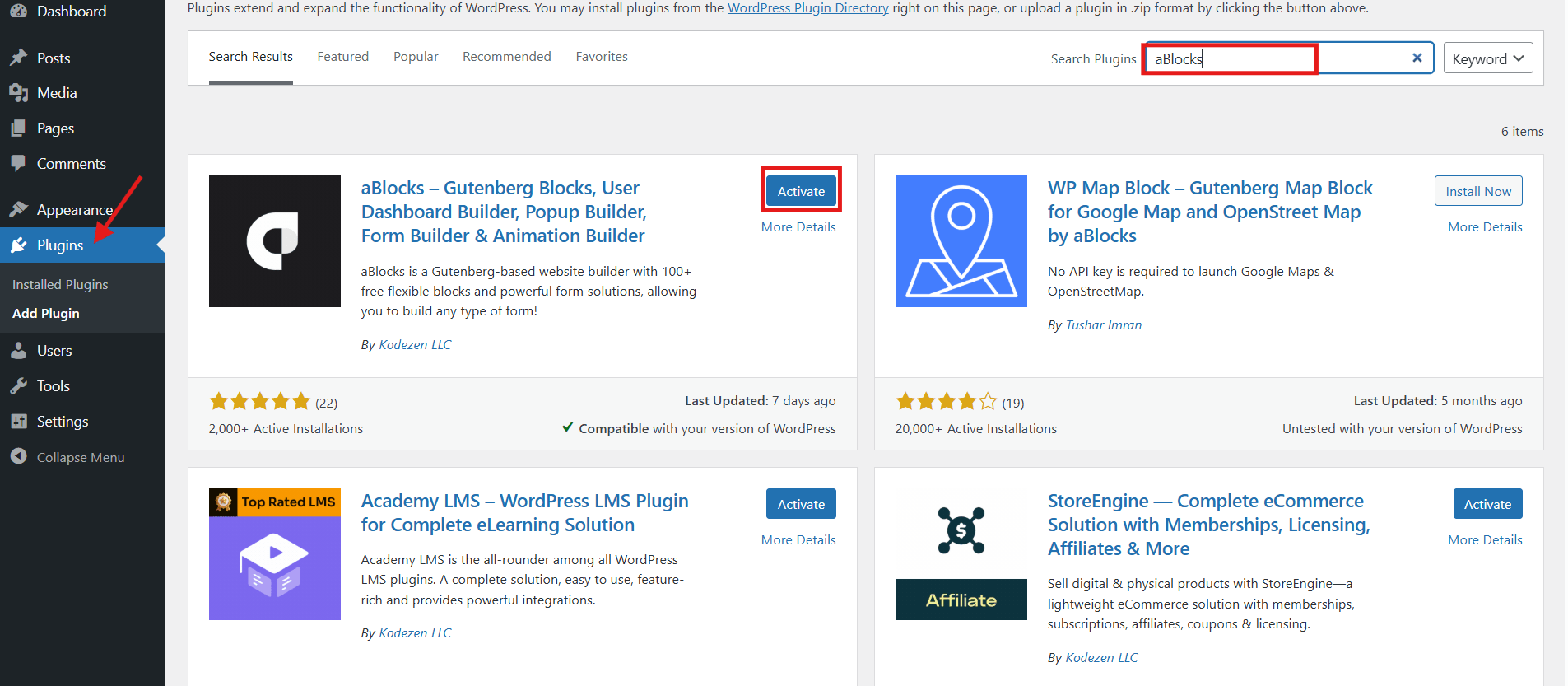
Before importing any starter template, you must install and activate the aBlocks plugin. The Academy Starter Templates are built entirely with the aBlocks Gutenberg page builder. Without aBlocks, imported templates will not render correctly.
1. Go to Dashboard > Plugins > Add New
2. Search for aBlocks
3. Click Install Now, then Activate
4. Confirm aBlocks is active before moving to the next step
Step 4: Install Academy LMS
- Go to Dashboard > Plugins > Add New
- Search for Academy LMS
- Click Install Now, then Activate
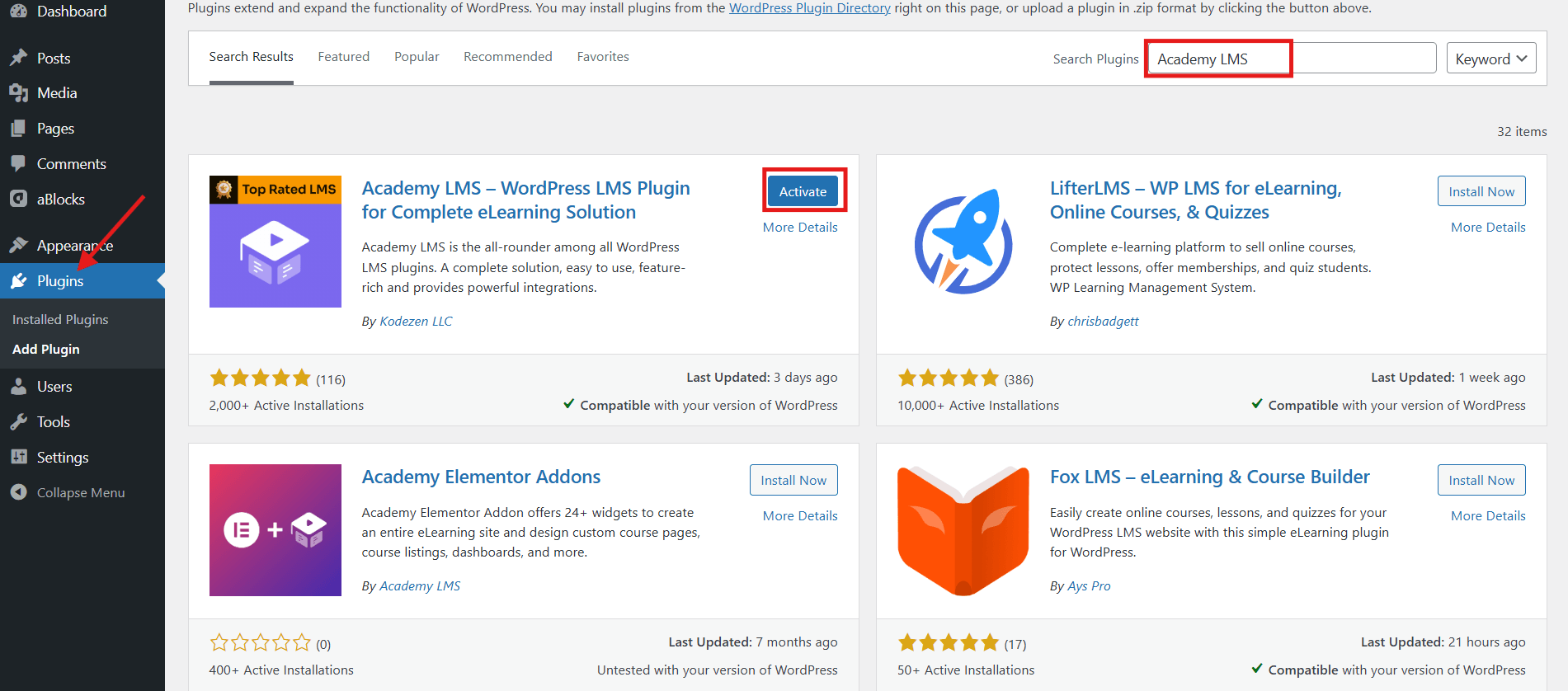
Academy LMS is now active on your site. It offers:
- Unlimited courses and lessons
- Built-in quiz builder
- Student progress tracking
- Instructor management
- Certificate generation
- StoreEngine integration for monetization
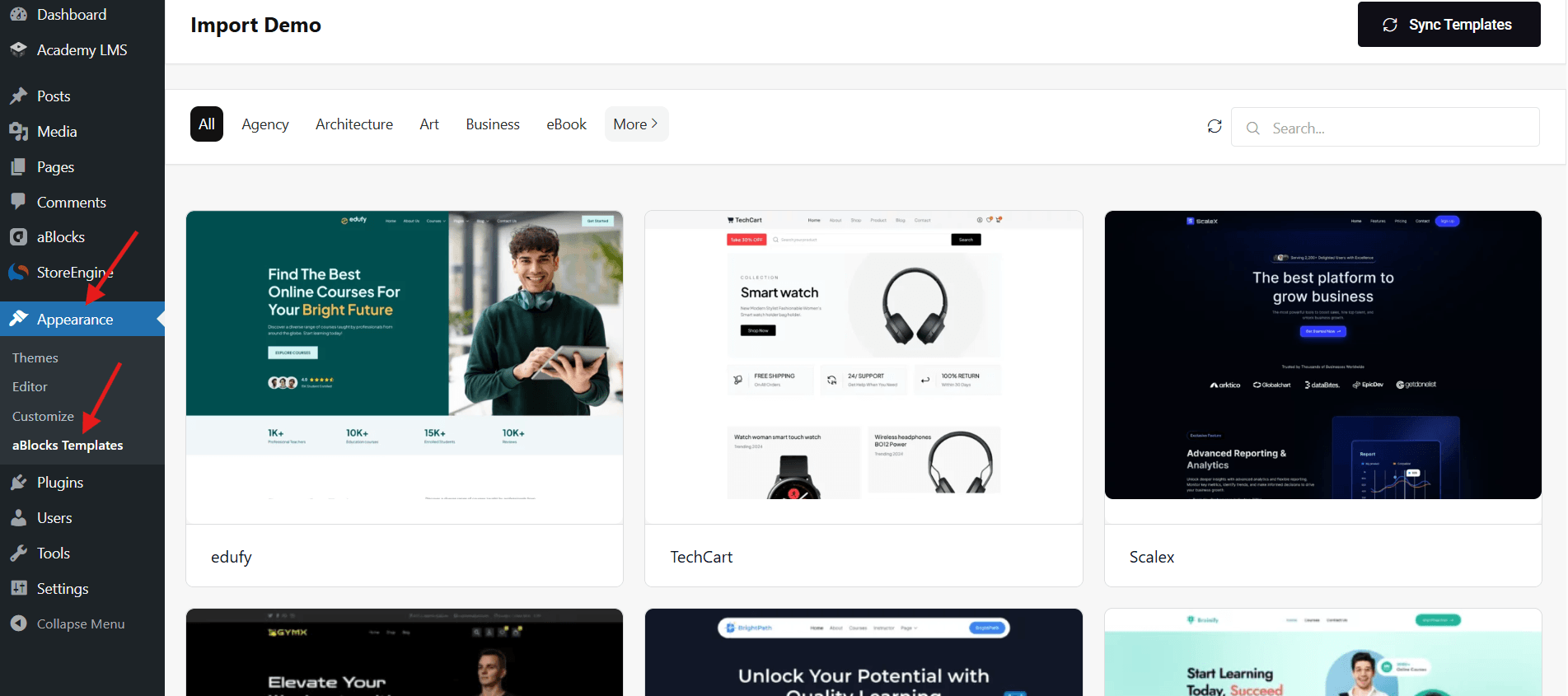
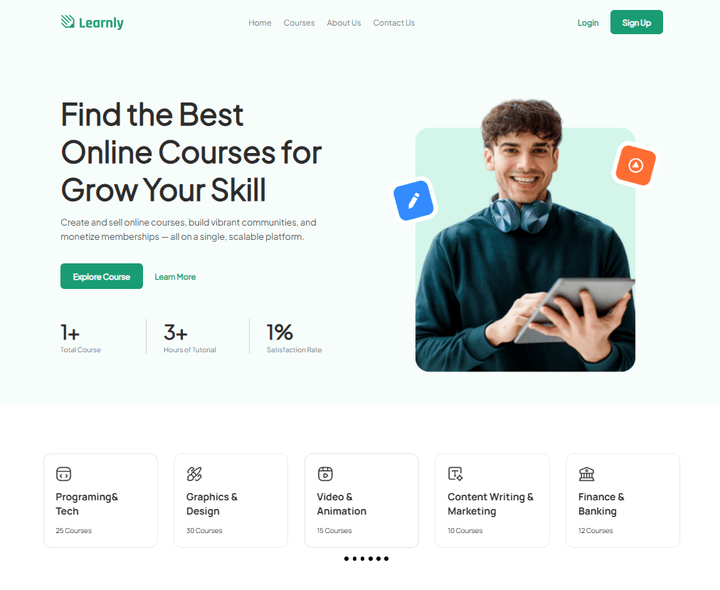
Step 5: Choose and Import a Template
At this stage, you will apply a ready-made design to your website. This allows you to quickly launch a professional-looking platform without designing everything from scratch.
Go to:
Appearance → aBlocks Templates (or Education)
You will see a collection of ready-made templates. Choose one that matches your platform’s style.
- Go to Plugins > Add New and search Education Template
- Install and activate it
- Navigate to the Academy in your dashboard
- Browse available templates and click Import Demo
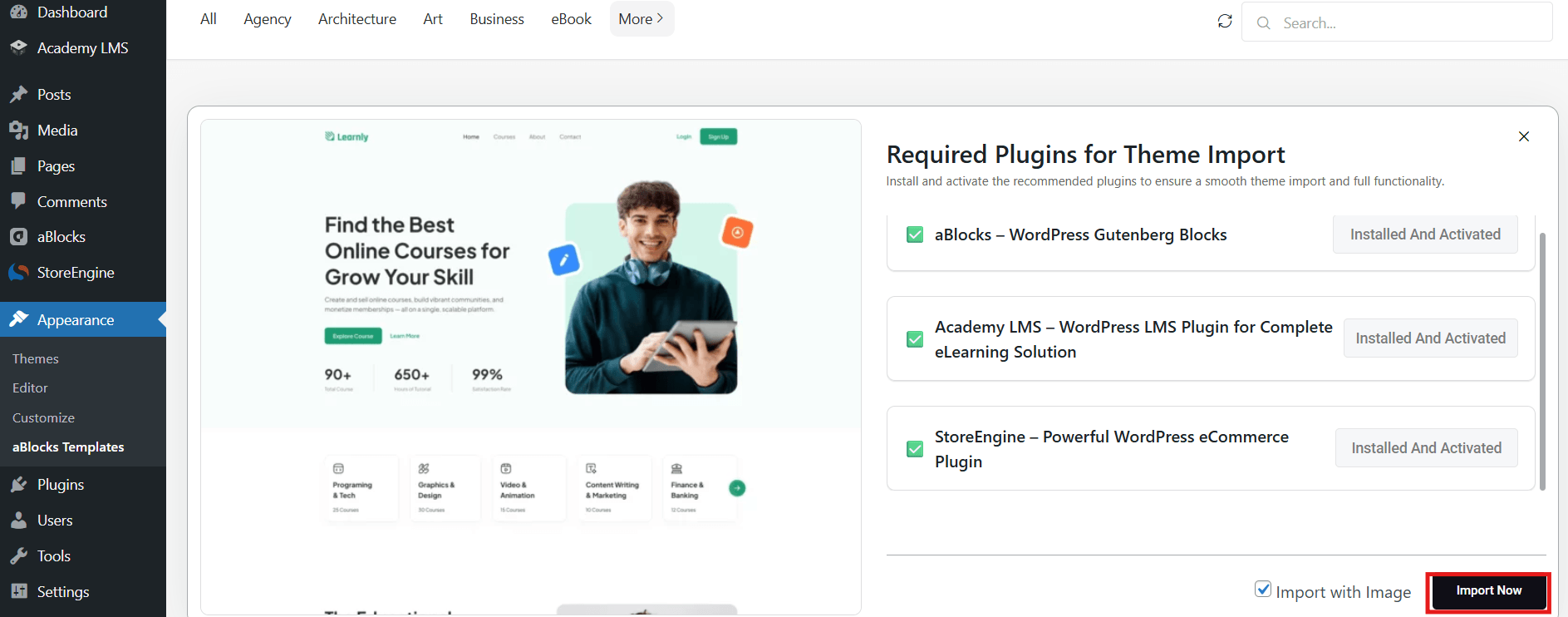
Your website will be fully built with a professional homepage, course pages, about page, and contact page within minutes.
Key Features to Include in Your Language Learning Platform
Modern language learners expect more than just video lessons. Here are the must-have features for a competitive platform:

1. AI-Powered Learning Paths
Integrate AI tools that assess a learner’s current proficiency level and recommend a personalized curriculum. Tools like the OpenAI API or Google Vertex AI can be embedded into your platform to power:
- Adaptive quizzes that get harder or easier based on performance
- Personalized vocabulary flashcard decks
- AI writing and grammar correction tools
2. Interactive Video Lessons
Static text is no longer sufficient. Use interactive video hosting platforms like Mux or Vimeo OTT to embed:
- Clickable subtitles in the target language
- In-video quizzes and pause points
- Dual-language captions
3. Live Session Integration
Offer live 1-on-1 or group sessions with tutors using integrations like:
- Zoom API
- Google Meet
- Daily.co (white-label video calling)
Academy LMS supports live class scheduling through its add-ons and third-party integrations.
4. Gamification Elements
Increase learner retention by adding gamification:
- XP points and level badges
- Daily streak tracking (similar to Duolingo)
- Leaderboards for top learners
- Achievement certificates upon course completion
Academy LMS offers a built-in certificate addon and gamification features in its Pro version.
5. Community and Discussion Forums
Language learning improves dramatically with social practice. Add:
- Course-level discussion boards
- Language exchange partner matching
- Group learning challenges
Plugins like ZenCommunity integrate well with Academy LMS for community features.
6. Mobile App (PWA or Native)
A mobile-first approach is non-negotiable. You have two options:
- Progressive Web App (PWA): Convert your WordPress site into a PWA using plugins like PWA for WP. Users can install it on their phone’s home screen without an app store.
- Native App: Use platforms like Kodular, FlutterFlow, or hire a developer to build a native Android/iOS app connected to your WordPress backend via REST API.
7. Multilingual Interface
Since your audience speaks different languages, ensure your platform is available in multiple interface languages. Use WPML or Polylang for multilingual WordPress sites.
Creating Language Learning Courses with Academy LMS
Step 1: Add a New Course
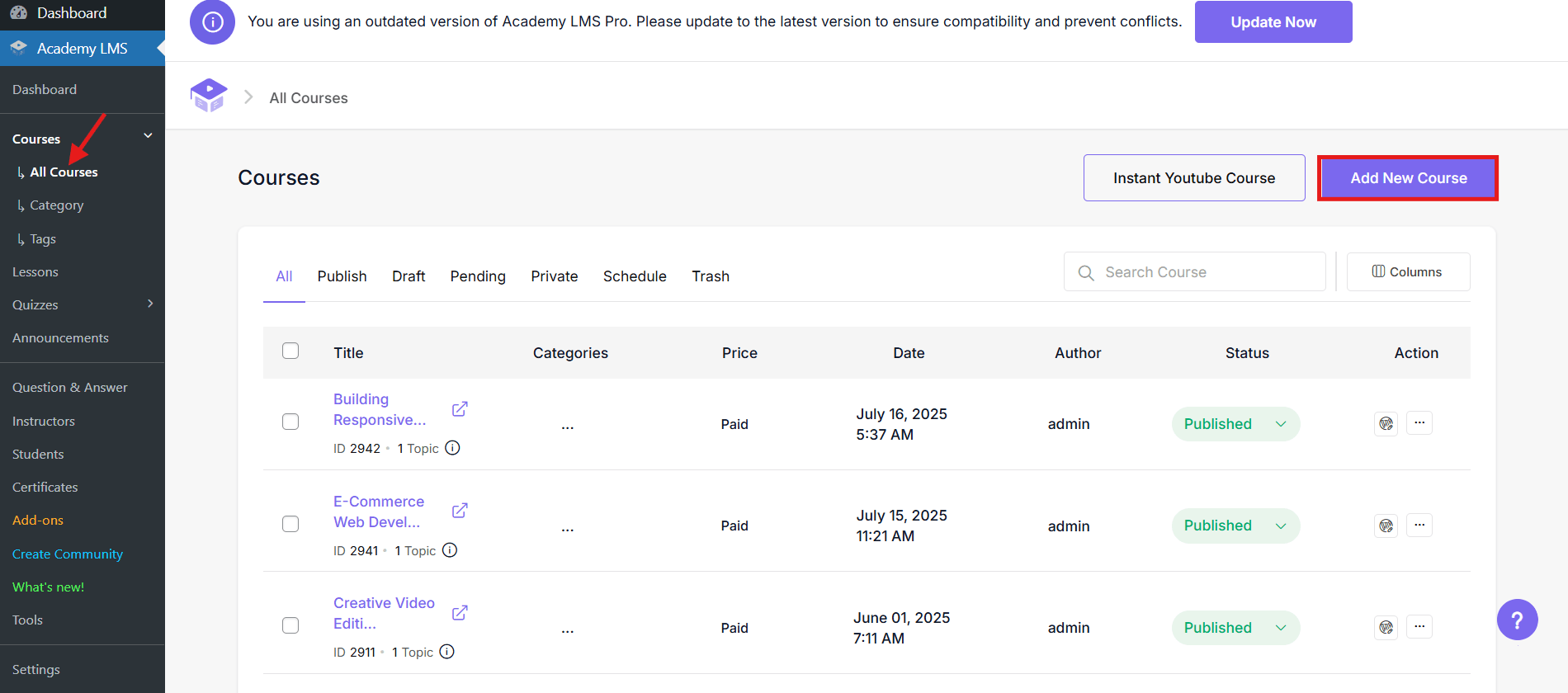
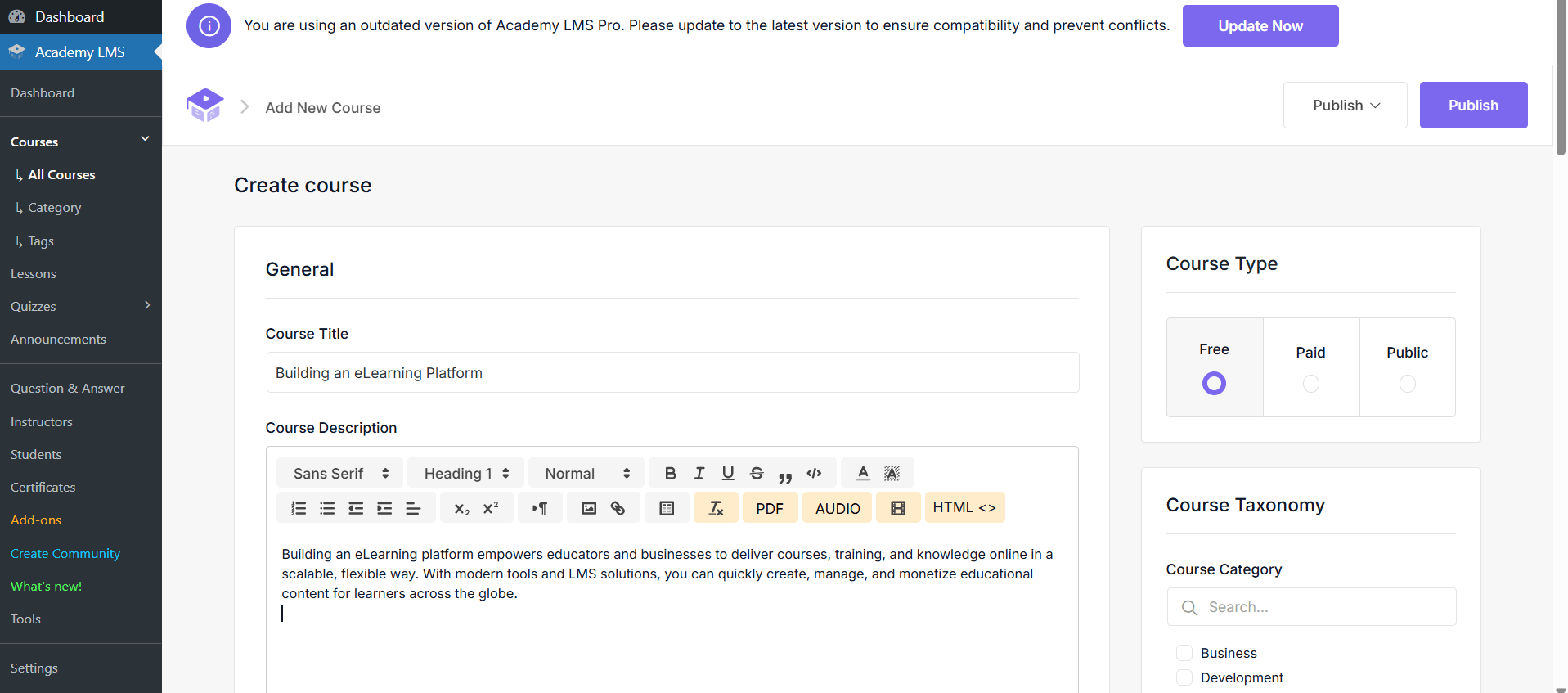
Go to Academy LMS > Add New Course from your dashboard. Fill in:
- Course title and description
- Featured image or intro video
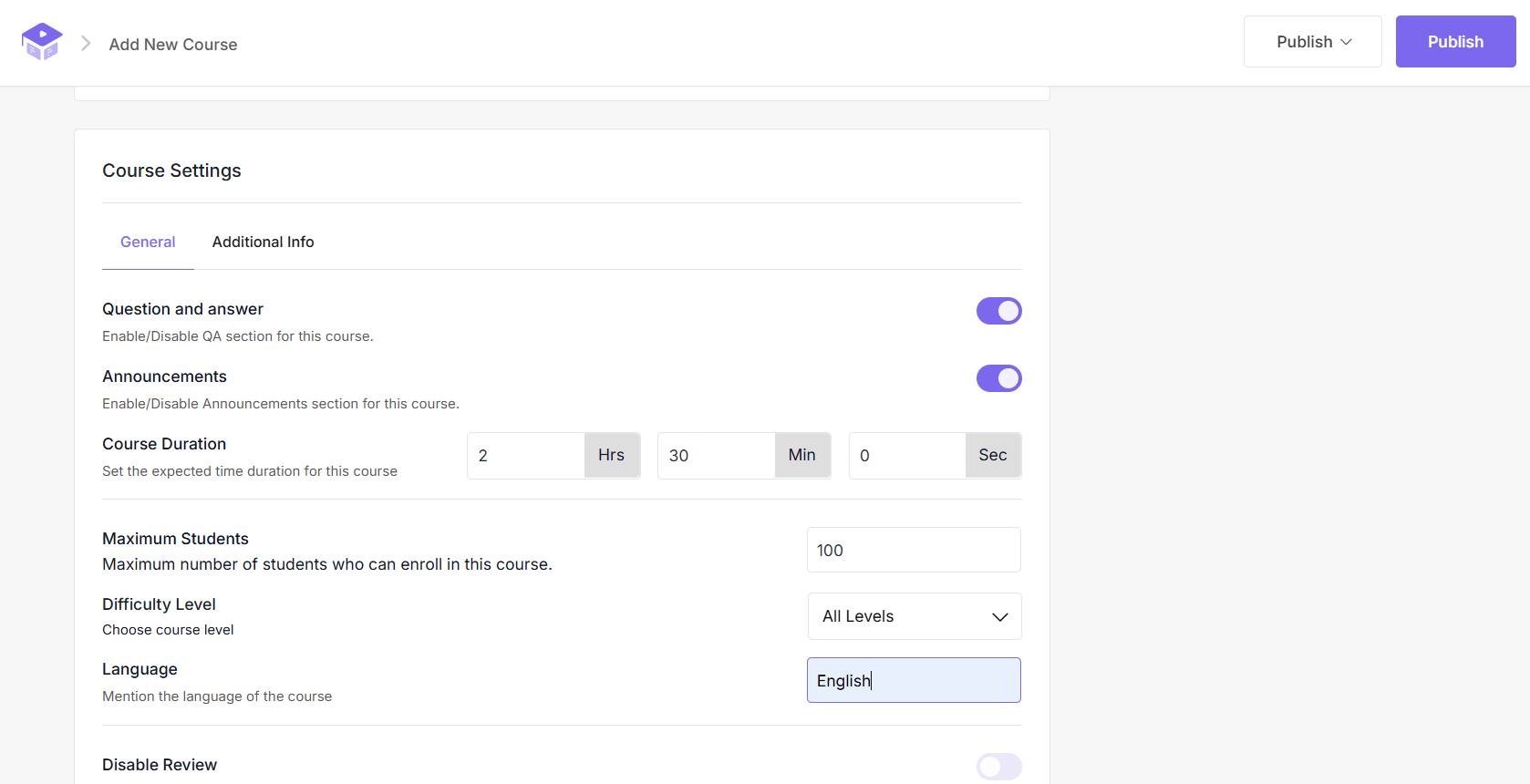
- Difficulty level (Beginner, Intermediate, Advanced)
- Course type (Free or Paid)
- Maximum students allowed
- Course duration and schedule
Step 2: Build the Course Curriculum
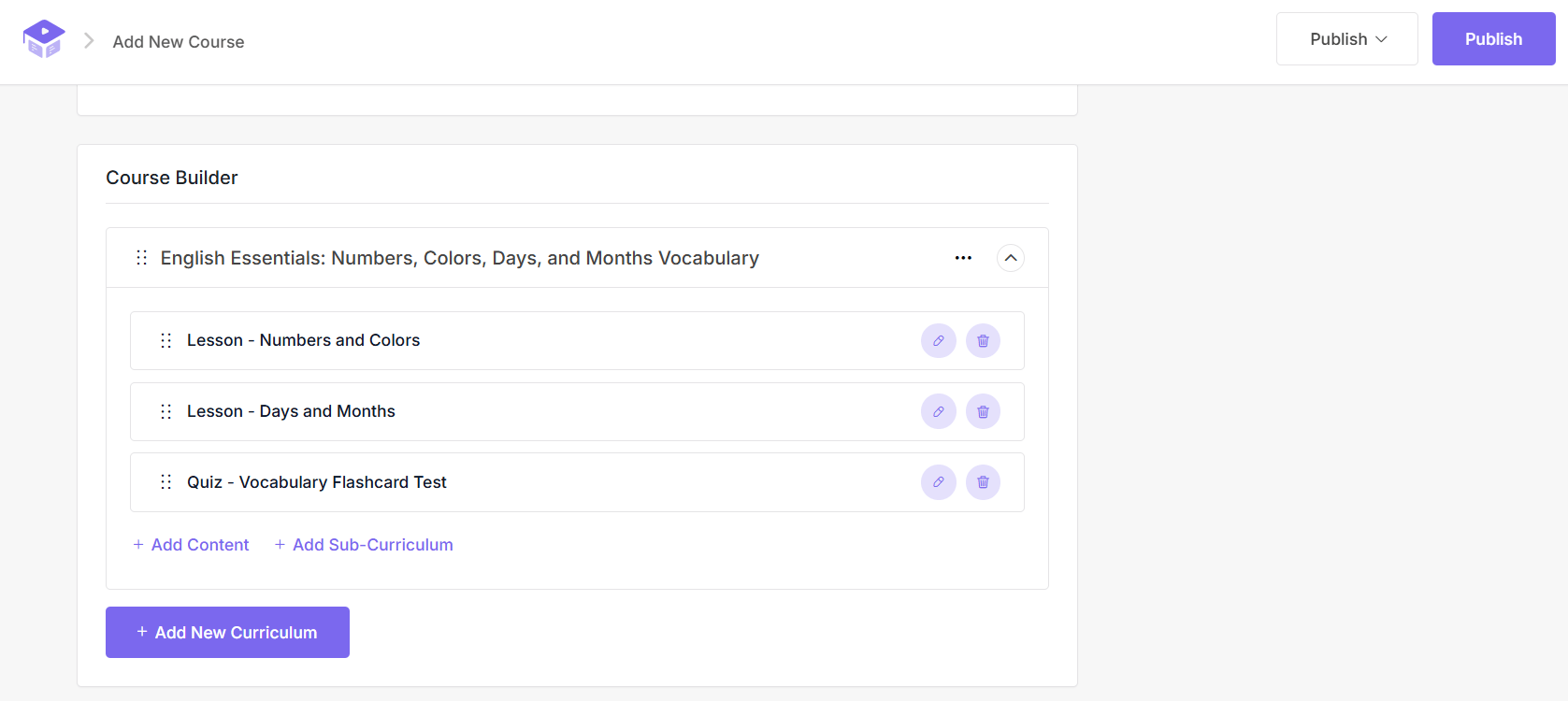
Inside the course, use the Course Builder to organize your content into Topics and Lessons. A well-structured language course might look like:
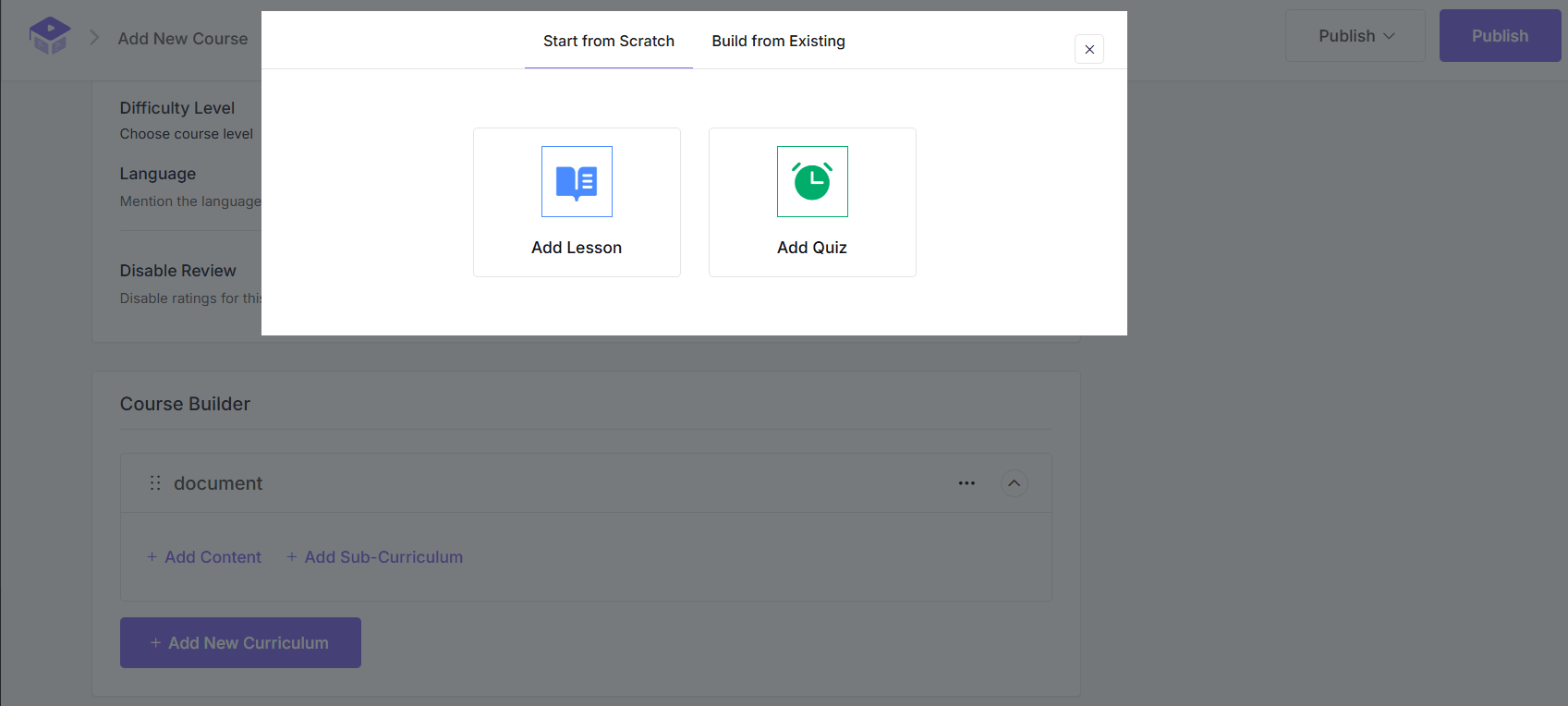
- Topic 1: Introduction and Pronunciation
- Lesson 1: The Alphabet and Sounds
- Lesson 2: Basic Greetings
- Quiz: Pronunciation Check
- Topic 2: Essential Vocabulary
- Lesson 1: Numbers and Colors
- Lesson 2: Days and Months
- Quiz: Vocabulary Flashcard Test
Step 3: Create Engaging Lessons
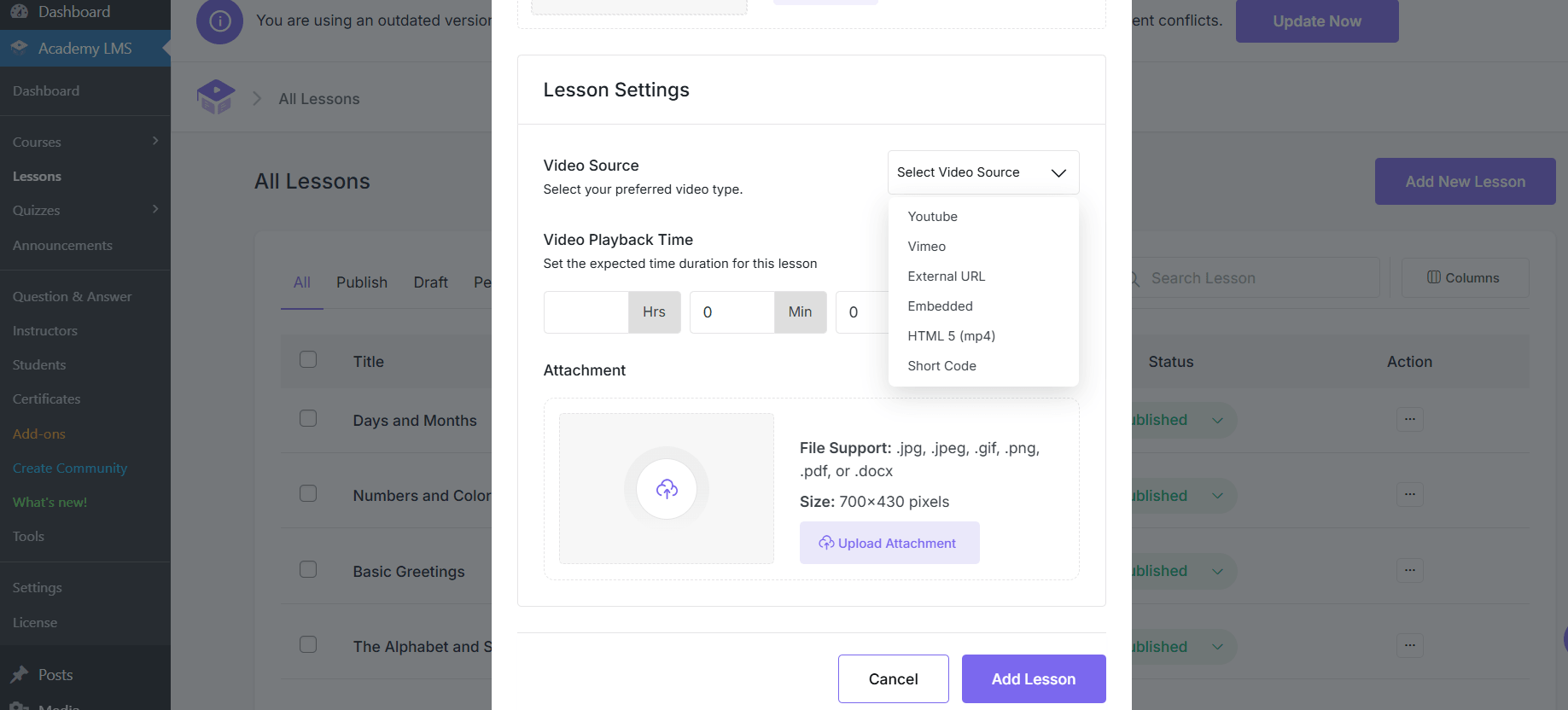
Each lesson supports:
- Text content with rich formatting
- Video embeds (YouTube, Vimeo, or self-hosted via Buny.net)
- Audio files for listening exercises
- Downloadable PDFs (vocabulary sheets, grammar guides)
- Attachments for homework or supplementary materials
Step 4: Build Quizzes
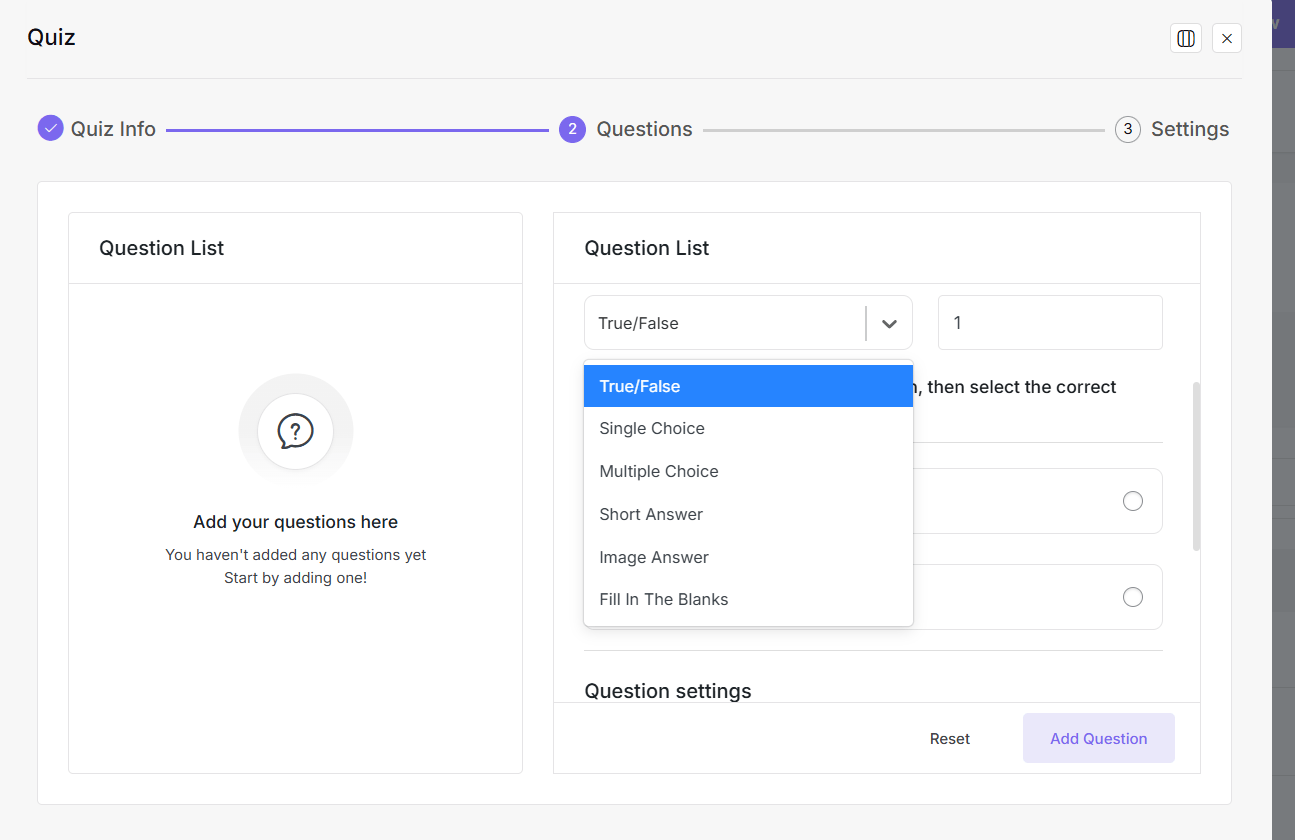
Quizzes are critical for language assessment. Academy LMS supports:
- Multiple choice questions
- True/False questions
- Fill-in-the-blank
- Short answer / Essay format
- Timed quizzes with attempt limits
- Instant or delayed result display
For language platforms, consider adding:
- Audio-based questions (listen and choose)
- Image-word matching
- Sentence ordering/rearranging exercises
Monetization Strategies for Your Language Learning Platform
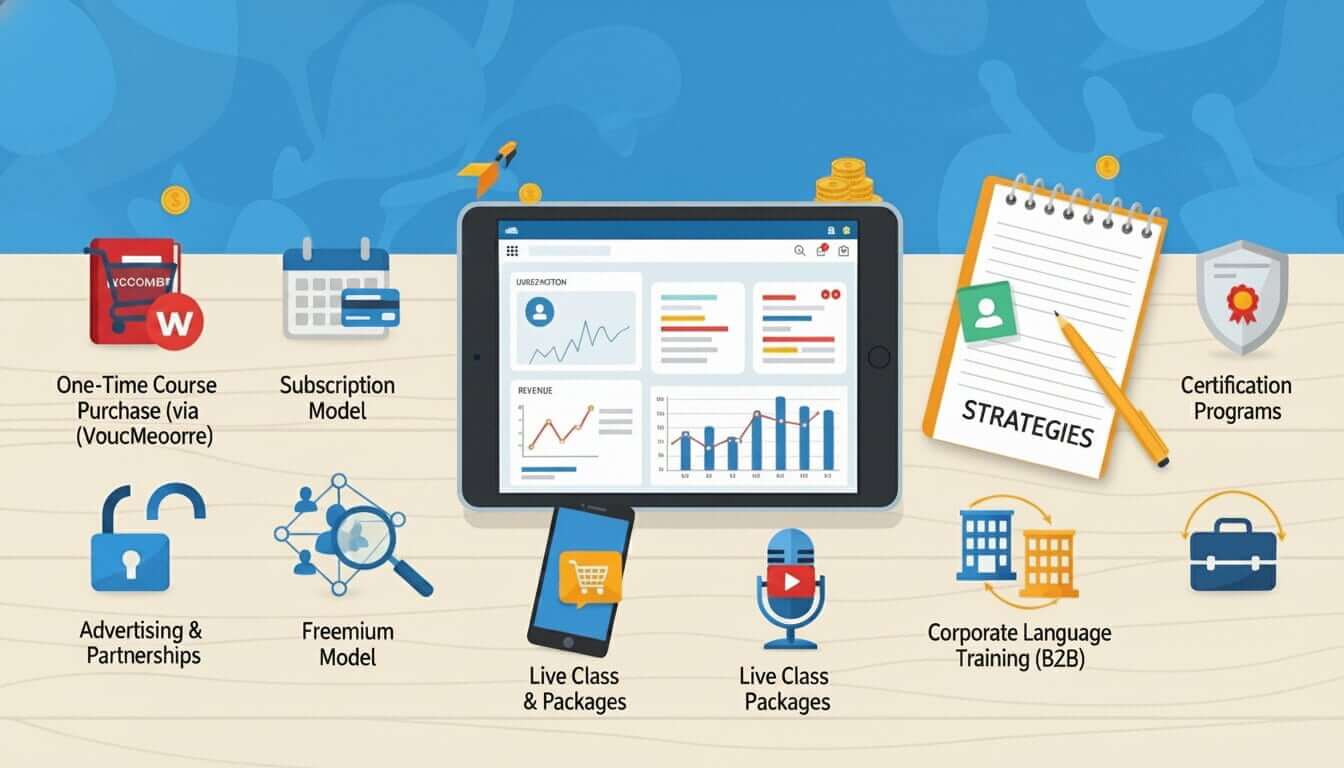
1. One-Time Course Purchase (via StoreEngine)
The simplest model. Students pay once to get lifetime access to a course. Use the StoreEngine integration in Academy LMS to create course products and set pricing.
Steps:
- Install StoreEngine
- Create a product for your course with a price
- In course settings, select the course type as Paid and link to the StoreEngine product
- Set up payment gateways: Stripe, PayPal, Razorpay, or local gateways
2. Subscription Model
Offer monthly or annual memberships for access to all courses. Use the StoreEngine Subscriptions addon integrated with Academy LMS. This model provides predictable recurring revenue.
3. Freemium Model
Offer the first few lessons for free and lock advanced content behind a paywall. This is highly effective for attracting learners who are not ready to pay upfront.
4. Tutor Marketplace Model
Allow independent language tutors to create and sell their own courses on your platform. You earn a commission (e.g., 20-30%) on every sale. Academy LMS’s Multi-Instructor Addon and Earnings Management features make this easy to set up.
5. Live Class Packages
Sell bundles of live 1-on-1 tutoring sessions. This premium offering can command significantly higher prices (e.g., $50-$150 per session) and is in high demand among serious learners.
6. Corporate Language Training (B2B)
Partner with companies to offer bulk seat licenses for employee language training. This B2B model can generate large, stable contracts. Use Academy LMS’s group enrollment and reporting features to serve corporate clients.
7. Certification Programs
Offer official language proficiency certificates upon completion of structured programs. Recognized certificates can justify premium pricing (e.g., $199-$499 per certification program).
Collecting Payments
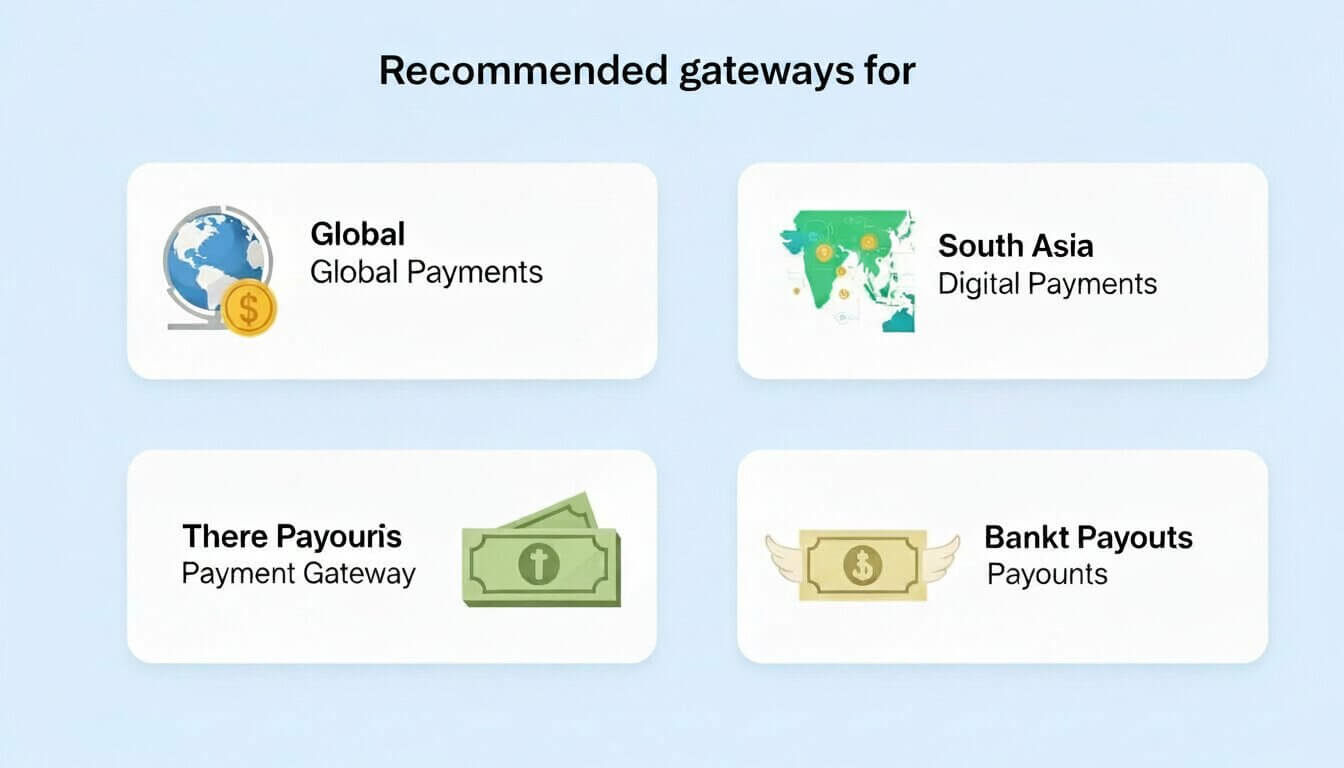
Go to StoreEngine > Settings > Payments to configure your payment gateways. Recommended gateways for:
- Best for global credit/debit card payments
- Widely trusted globally
- Best for South Asian markets (India, Bangladesh)
- Good for instructor payouts internationally
Ensure your checkout is mobile-optimized and supports local payment methods in your target markets.
SEO and Marketing Your Language Learning Website
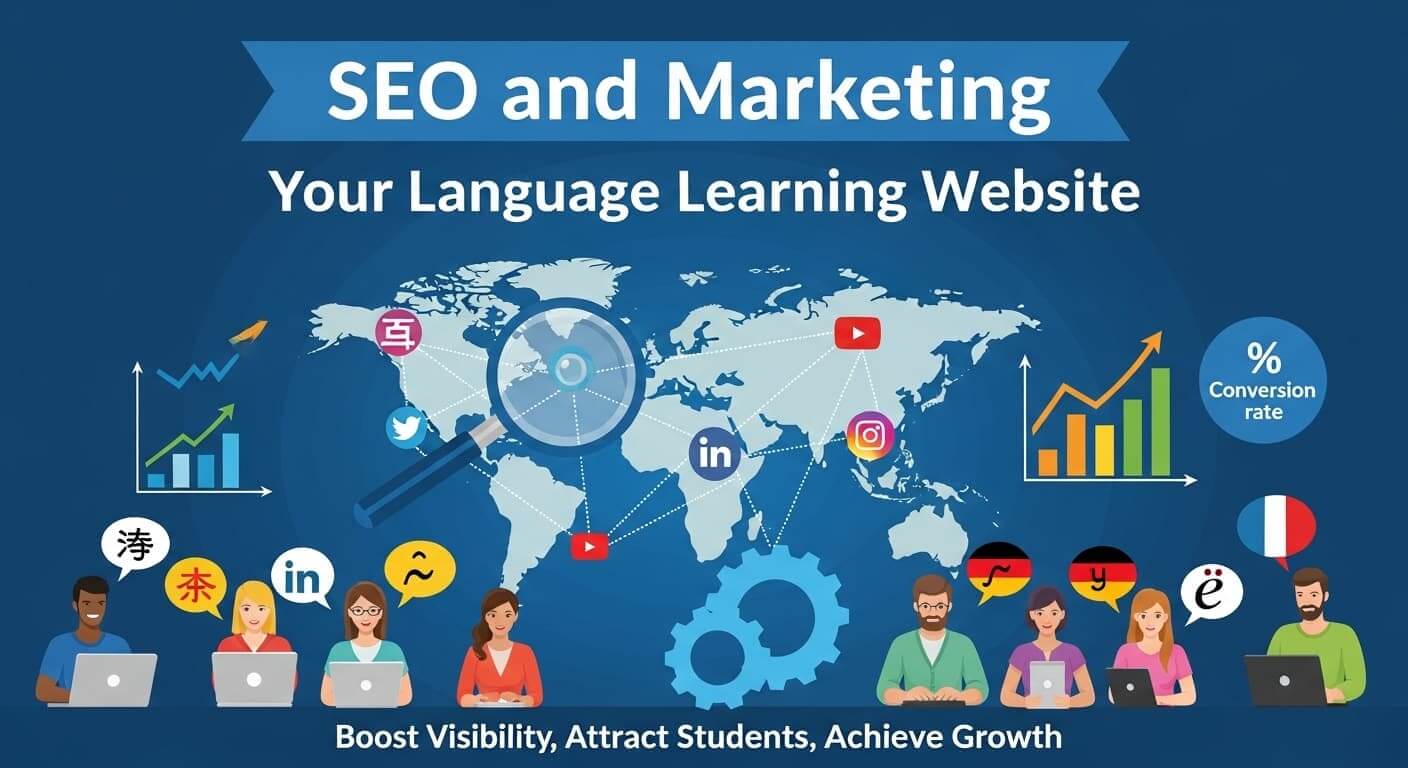
A great platform without visitors earns nothing. Here are the most effective marketing strategies:
Search Engine Optimization (SEO)
- Use plugins like Rank Math or Yoast SEO to optimize course pages
- Target long-tail keywords like “learn Spanish online for beginners free” or “Japanese grammar course for adults.”
- Create a blog with grammar tips, travel phrases, and language learning advice to drive organic traffic
- Build backlinks through guest posts on education and travel blogs
Social Media Marketing
- Create short-form video content on TikTok and Instagram Reels, teaching quick language tips
- Post vocabulary cards and language memes on Pinterest
- Run Facebook and Instagram ads targeting users interested in travel, immigration, and career development
YouTube Channel
Start a free YouTube channel teaching basic language lessons. Use it as a top-of-funnel to drive learners to your paid platform for deeper courses. Add yourAcademyLMS YouTube channel link to every video description so viewers can easily enroll in paid courses.
Email Marketing
Use Mailchimp or Brevo (formerly Sendinblue) to:
- Offer a free vocabulary mini-course in exchange for an email signup
- Send weekly language tips to nurture your audience
- Promote new course launches and discounts
Affiliate Marketing
Allow existing students and bloggers to earn a commission for referring new learners. Use AffiliateWP integrated with StoreEngine to manage your affiliate program, track referrals, and automate commission payouts.
Essential Plugins and Tools for Your Language Learning Platform
|
Tool / Plugin |
Purpose |
|
Core LMS and course management |
|
|
Payments and course sales |
|
|
Quizzes, assessments, and progress testing |
|
|
Community forums and social features |
|
|
Discussion boards and collaborative spaces |
|
|
Student CRM and enrollment management |
|
|
Content access control and lesson gating |
|
|
Fast and affordable video hosting |
Tips for Running a Successful Language Learning Platform
- Design a visually appealing, distraction-free homepage that clearly states who your platform is for and what language(s) you teach.
- Display key navigation links prominently: Courses, Tutors, Pricing, and Sign Up.
- Add a language switcher so non-English visitors can browse your site in their native language.
- Offer free trial lessons or a free starter course to reduce the barrier to entry.
- Showcase real student testimonials, success stories, and before/after learning journeys.
- Make sure your platform is fully responsive and tested on Android and iOS devices.
- Provide downloadable learning resources such as PDF vocabulary lists, grammar cheat sheets, and audio pronunciation guides.
- Use analytics (Google Analytics 4 or Matomo) to track which courses perform best and where learners drop off.
- Respond to student questions quickly — great support builds loyalty and positive reviews.
- Update course content regularly to reflect current language usage, slang, and cultural references.
Final Thoughts
Building a language learning website or app is both accessible and highly rewarding. With tools like WordPress, Academy LMS, StoreEngine, and modern AI integrations, you can launch a professional platform in days, even without coding experience. Long-term success depends on publishing high-quality lessons, actively engaging your learners, and adapting to evolving expectations. Start with a clear niche, test your courses with real students, and refine based on feedback. Over time, scale your offerings, deepen community features, and expand your marketing. With persistence and focus, your language learning platform can grow into a sustainable, impactful business.
Frequently Asked Questions
Do I need coding skills to build a language learning website?
No. WordPress with Academy LMS is designed for non-developers. You can set up, design, and manage your entire platform without writing a single line of code. For advanced customization, basic knowledge of HTML/CSS can be helpful, but is not required.
Can I allow multiple tutors to teach on my platform?
Yes. Academy LMS offers a Multi-Instructor Addon that allows multiple tutors to create, manage, and sell their own courses on your platform. You can set commission percentages and manage instructor payouts through the built-in earnings management system.
How can I prevent students from sharing their login credentials?
You can limit simultaneous logins per account using security plugins. WooCommerce also allows you to tie course access to a specific user account, which discourages credential sharing. For enterprise plans, consider IP-based restrictions.