







Most “how to sell your course” guides repeat the same generic advice: create good content, post on social media, build an email list. True, but not actionable. What actually moves a visitor from curious to buying is psychology, and the creators consistently selling the most courses are using the same handful of behavioral principles, deliberately, on every sales page and email they write.
This guide covers 15 of those growth-hacking techniques, the actual psychological levers behind conversion, each with a real example from a platform you’d recognize. Your course still has to be genuinely good; none of this works as a substitute for that. But a good course with weak positioning loses to a good course with sharp positioning every time.
Filter Your Customers and Their Buying Intent
Before any growth hack works, you need to know exactly who you’re talking to. Defining your target audience isn’t a branding exercise, it determines which platforms you market on, which words you use, and which hacks below are even worth trying. A pop-up ad on a university site wastes budget if your buyer is a working professional; LinkedIn and job boards reach that audience far more efficiently.
1. Highlight the Benefits to Your Customers
People aren’t buying a course, they’re buying a better version of themselves: a new skill, a promotion, a confidence they don’t have yet. Your sales page copy should reflect the specific change your student is expecting in their life, not a list of modules. Coursera’s Meta Android Developer certificate does this well, leading with what a learner will be able to do, not how many hours of video are included.
2. Implement Effective Sales Messaging (Echoing)
Echoing means writing your sales copy in your audience’s own words and phrasing, pulled directly from how they actually describe their problem. Follow your audience on social media, read reviews of similar courses, and dig into forum threads to find that exact language. edX’s landing pages are a good study in this: the copy mirrors how learners actually talk about wanting a career change, not how a marketer would phrase it.
3. Increase Your Customers’ Perceived Need (Cross-Sells and Upsells)
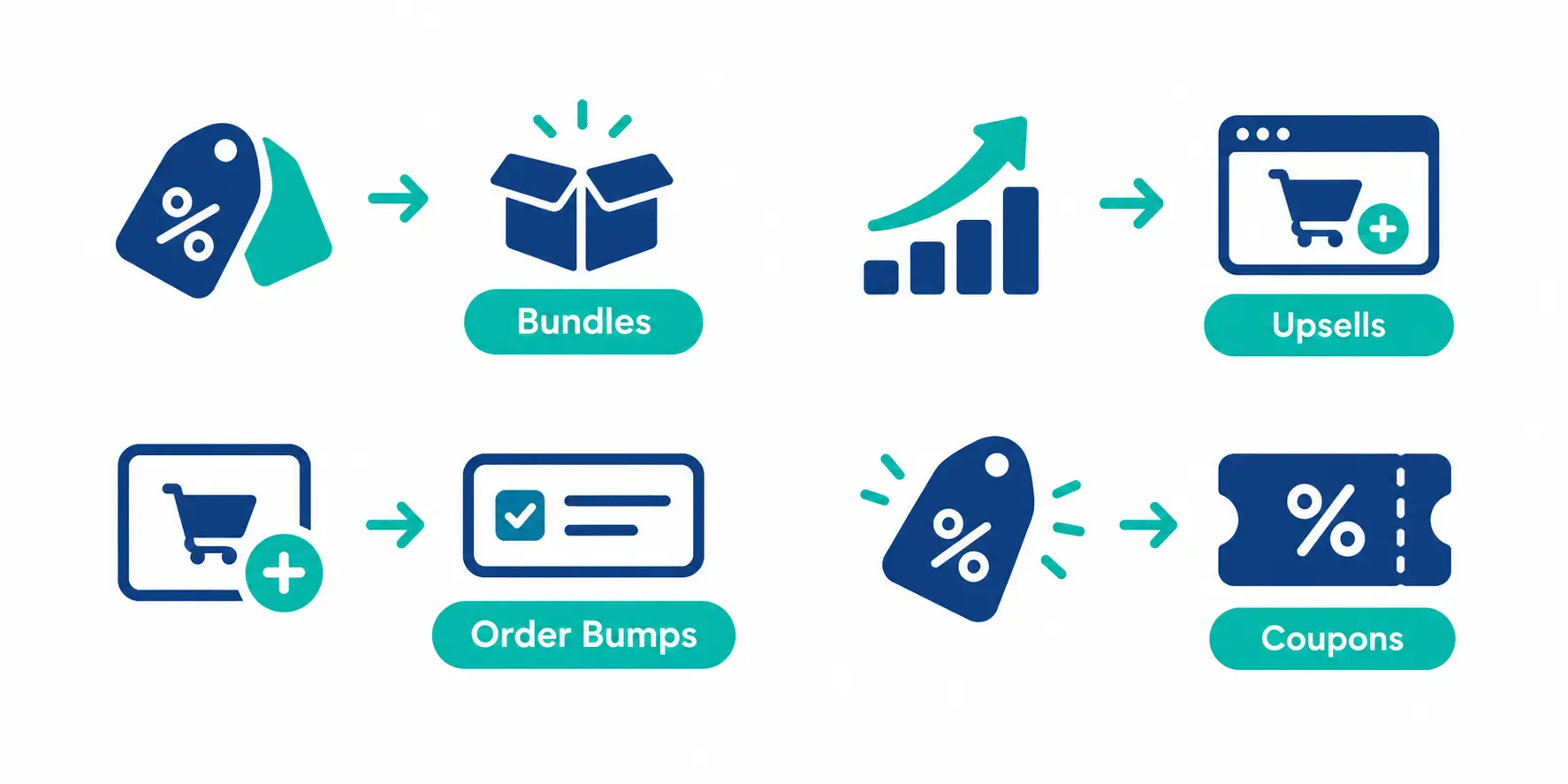
This is the “would you like fries with that” principle applied to course sales. Udemy’s bundled course packages (13 related courses sold as one) work because the buyer feels they’re getting outsized value for a modest price increase. Structure your own offer the same way: a basic single-course option, and a slightly pricier bundle that includes templates, bonus lessons, or past webinar recordings you’ve already created.
4. Lure Customers with Price Anchoring
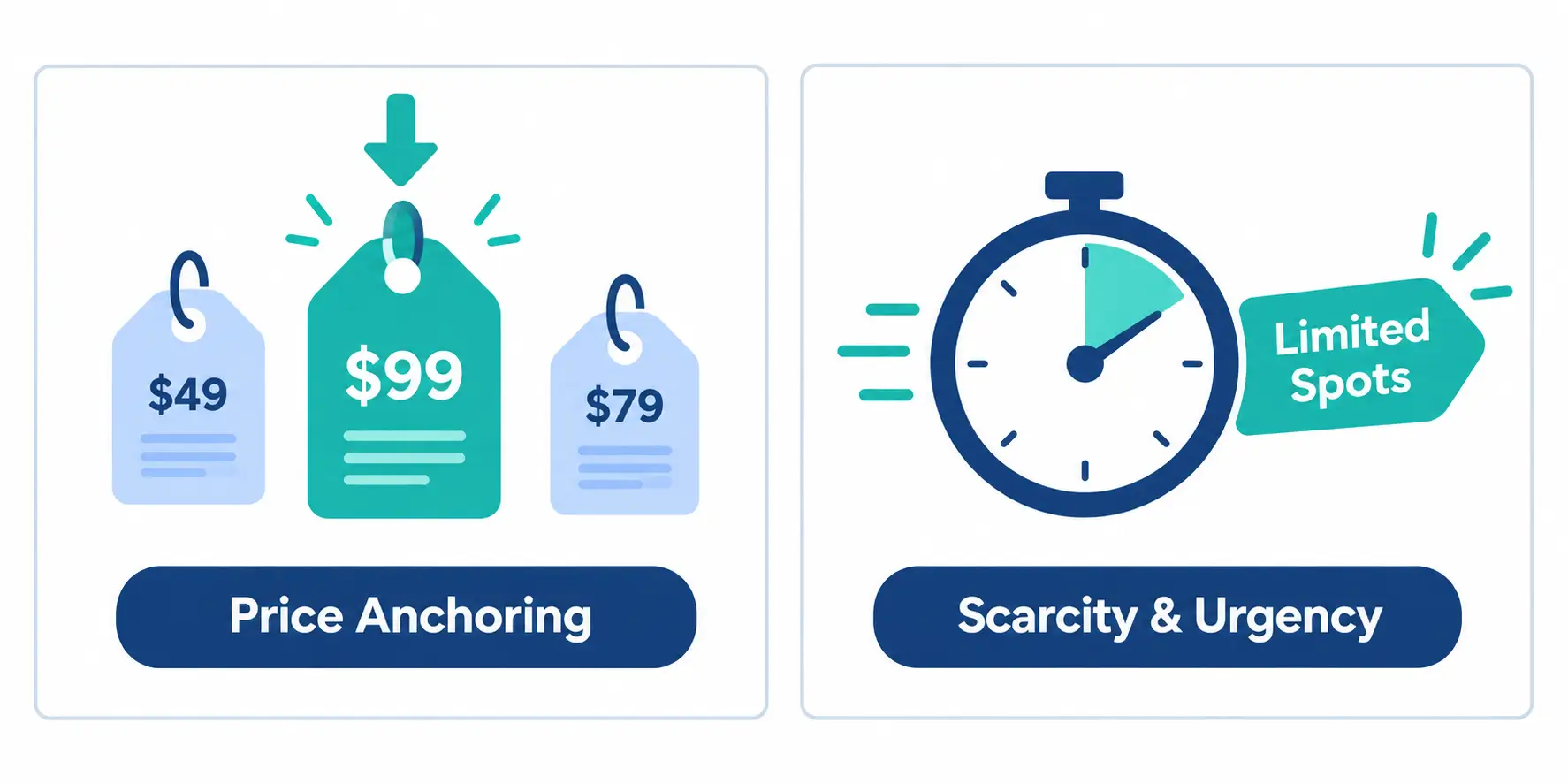
This is the jeweler’s trick: show an expensive option first, then reveal a more reasonable one, and the second price feels like a bargain by comparison, even if it’s still a premium price. Rosetta Stone’s pricing page uses this directly, a lifetime-access tier anchors the subscription tiers beneath it as the “smart” choice. Course sellers and subscription platforms use the same structure: list a premium tier first, so your standard tier reads as the sensible middle ground rather than the most expensive option available.
5. Increase Sales by Generating Scarcity and Urgency
A genuine deadline changes how seriously a prospective student considers your offer. Limited cohort sizes, a bonus that disappears after a set date, or a price that increases at a specific time all work, provided the deadline is real. If you say an offer ends and then quietly extend it anyway, you lose the credibility that made urgency work in the first place.
6. Highlight Social Proof to Increase Reliability
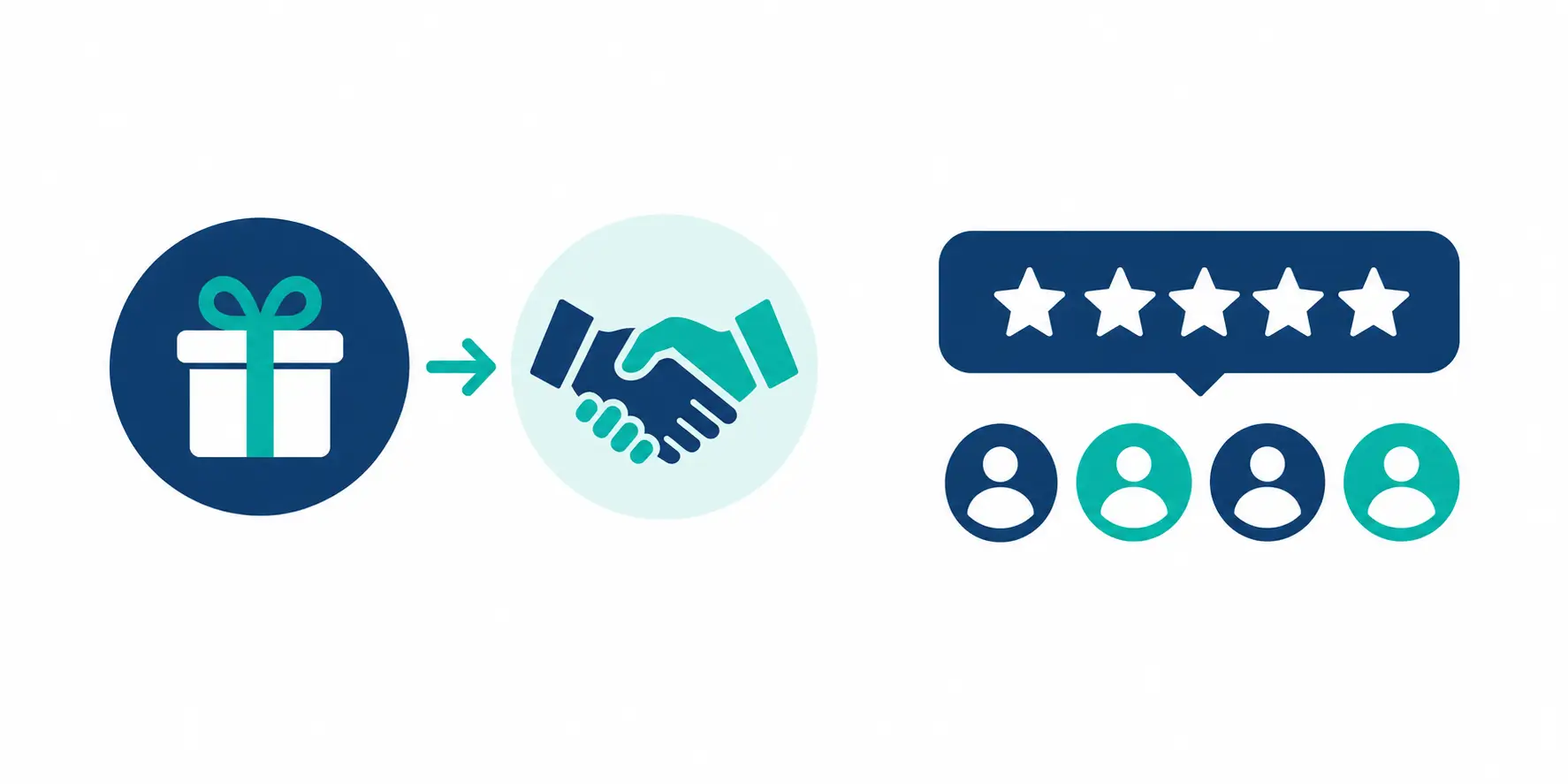
Social proof lowers the single biggest barrier to a first purchase: not knowing if it’ll actually work. The data on this has only gotten stronger: reviews now influence roughly 93% of consumers’ purchasing decisions, and a product’s first five reviews alone can lift purchase likelihood by up to 270%. Display real student outcomes and testimonials prominently, the way Coursera surfaces learner reviews directly on its Google Technical Support course page, not buried on a separate page nobody visits.
7. Let Customers Feel What They’re Missing (Regret)
Loss aversion, the discomfort of missing out on something, is a stronger motivator than the promise of gain alone. Used carefully, copy that highlights what a prospective student is currently missing out on can move a hesitant reader to act. Used carelessly, it reads as manipulative and alienates your audience, so test variations of this copy rather than assuming the strongest version is automatically the best one.
8. Demonstrate the Cost of Inaction
Related to regret but more specific: show the concrete consequence of not acting. If your course builds a skill tied to earning potential, show the realistic earnings or career gap between people with that skill and people without it. This works because it makes an abstract “someday I should learn this” feel like an active, ongoing cost.
9. Show Them the Vision of a Better Life
Beyond the immediate skill, connect your course to the bigger life change it enables. Coursera’s “Live Your Best Life” course collection leans entirely into this framing, selling the outcome of the outcome. The copy works because it lets the reader picture themselves somewhere better, not just more skilled.
10. Offer Free Material First (Reciprocity)
Give something genuinely useful away before asking for a sale, a free lesson, an ebook, a short workshop, and a meaningful share of recipients become more willing to say yes to the paid offer later. OpenLearn’s large free-course catalog is built entirely on this principle: free material first builds enough trust that the paid upgrade feels like a natural next step, not a cold pitch.
11. Portray an Exclusive Brand Image
Perceived exclusivity raises perceived value. Thoughtful landing-page design, strong visuals, and testimonials from recognizable names in your niche all contribute to a course feeling premium rather than mass-market, which matters more at higher price points where buyers are evaluating prestige as much as content.
12. Use Reverse Psychology in Your Call to Action
Pairing your main call-to-action button with a smaller, deliberately unappealing opt-out option makes the decision to decline feel more consciously negative. For a language course, that might mean a primary button reading “I’ll learn English and French” next to a secondary link reading “I’ll only learn English.” The contrast nudges hesitant visitors toward the fuller offer.
13. Convince via the Disrupt-Then-Reframe Technique
Lead with a low, simple number (a per-day price), then reveal the full price alongside that same per-day framing on a later page. The total is identical, but presenting it per-day first changes how the full number lands, a classic copywriting reframe that removes some of the sticker shock from a single upfront total.
14. Connect Your Course to a Higher Purpose
Tying a portion of proceeds to a cause your audience genuinely cares about, literacy, environmental causes, local community support, gives price-sensitive buyers an additional, non-transactional reason to choose you. This only works if the contribution is real and verifiable; a vague, unproven claim does more damage to trust than making no claim at all.
15. Send Consistent, Valuable Emails
Email remains one of the highest-converting channels available to course creators precisely because it’s a direct line to people who’ve already opted in. Use it to announce new courses, share genuinely useful free content, and occasionally promote a discount, not to pitch in every single message. A list that only ever receives sales pitches unsubscribes fast.
Turning These Hacks Into an Actual Checkout Flow
Several of the tactics above (price anchoring, upsells and cross-sells, scarcity-based discounts, and the reverse-psychology nudge) aren’t just copywriting ideas, they’re checkout mechanics, and whether your course platform actually supports them determines how easily you can run them. StoreEngine, the native commerce engine for Academy LMS, builds several of these directly into the checkout flow instead of requiring a separate funnel tool.
None of this replaces writing genuinely good copy, the psychology still has to be sound. But a platform that makes these mechanics easy to set up is the difference between a growth hack staying a nice idea and it actually running on your sales page.
Final Thoughts
None of these growth hacks compensate for a weak course. Build something genuinely worth the price first, then apply these fifteen tactics to make sure the right people actually see its value clearly enough to buy. Most course creators underuse two or three of these at most, picking even four or five that fit your audience honestly will outperform a sales page built on generic feature lists.
Frequently Asked Questions
How can I sell my online course?
Combine a genuinely valuable course with psychology-based positioning: clear benefit-focused copy, social proof, real scarcity where it applies, and consistent email contact with people who’ve shown interest. Selling a course is rarely about one single tactic, it’s about layering several of the techniques above consistently.
What do I need to create and sell online courses?
A course-creation platform or plugin to build and host your content, a way to manage enrollment and payments, and a sales page or website to present the offer. On WordPress, a plugin like Academy LMS paired with StoreEngine covers course delivery and checkout together.
How can I market my online course?
Social media marketing on the platforms your specific audience actually uses, a growing email list you contact consistently with value (not just pitches), and content like blog posts or videos related to your course topic all work. Which channel to prioritize depends entirely on where your defined target audience already spends time.
What is the best online course platform?
There’s no single best platform, it depends on whether you want a built-in audience (a marketplace like Udemy) or full ownership of pricing and student data (your own site with a plugin like Academy LMS). Marketplaces solve discovery faster; owning your platform keeps more revenue and control long-term.
How much should I price my online course?
Base it on the depth of transformation your course delivers, your production quality, and what comparable courses in your niche charge, not on guessing the lowest number that feels safe. Underpricing is a more common mistake than overpricing, since it signals lower quality and caps your long-term revenue ceiling.
How can I build a community around my online course?
Add a discussion space or private group for enrolled students, host occasional live Q&A sessions, and give students a reason to interact with each other, not just the material. An engaged community meaningfully improves both completion rates and word-of-mouth referrals.