








Creating an online course is only half the job. Without promotion, even a genuinely excellent course sits unseen while a mediocre one with a real marketing plan outsells it. That’s not a fair outcome, but it’s the actual market you’re competing in.
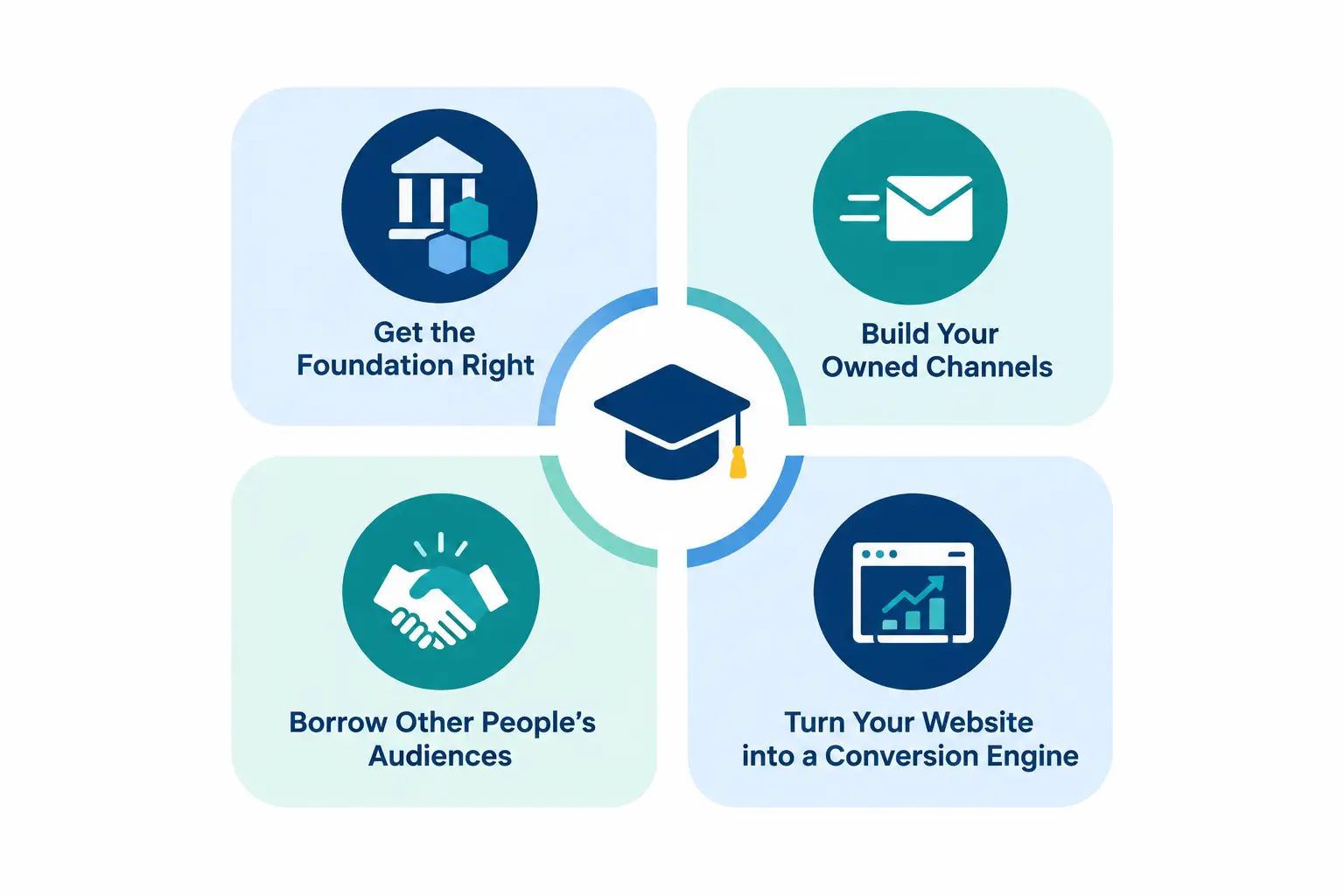
The mistake most guides make is listing 20+ tactics with no structure, leaving you to figure out which ones actually matter for where you are right now. This guide groups the tactics that work into four practical categories: getting your foundation right, building channels you own, borrowing other people’s audiences, and turning your website into an actual conversion engine.
Quick Answer: How do I promote an online course in 2026?
1. Get the Foundation Right Before You Promote Anything
No promotion tactic fixes a course that isn’t ready to sell. Before spending time or money on promotion, make sure the course itself is structured, has a dedicated sales page, and is hosted somewhere you actually control. Building on a marketplace platform means competing against every other course on that platform for the same buyers; building on your own WordPress site with a plugin like Academy LMS keeps pricing, promotion, and student data entirely in your hands, which matters for every tactic that follows.
2. Build Channels You Own
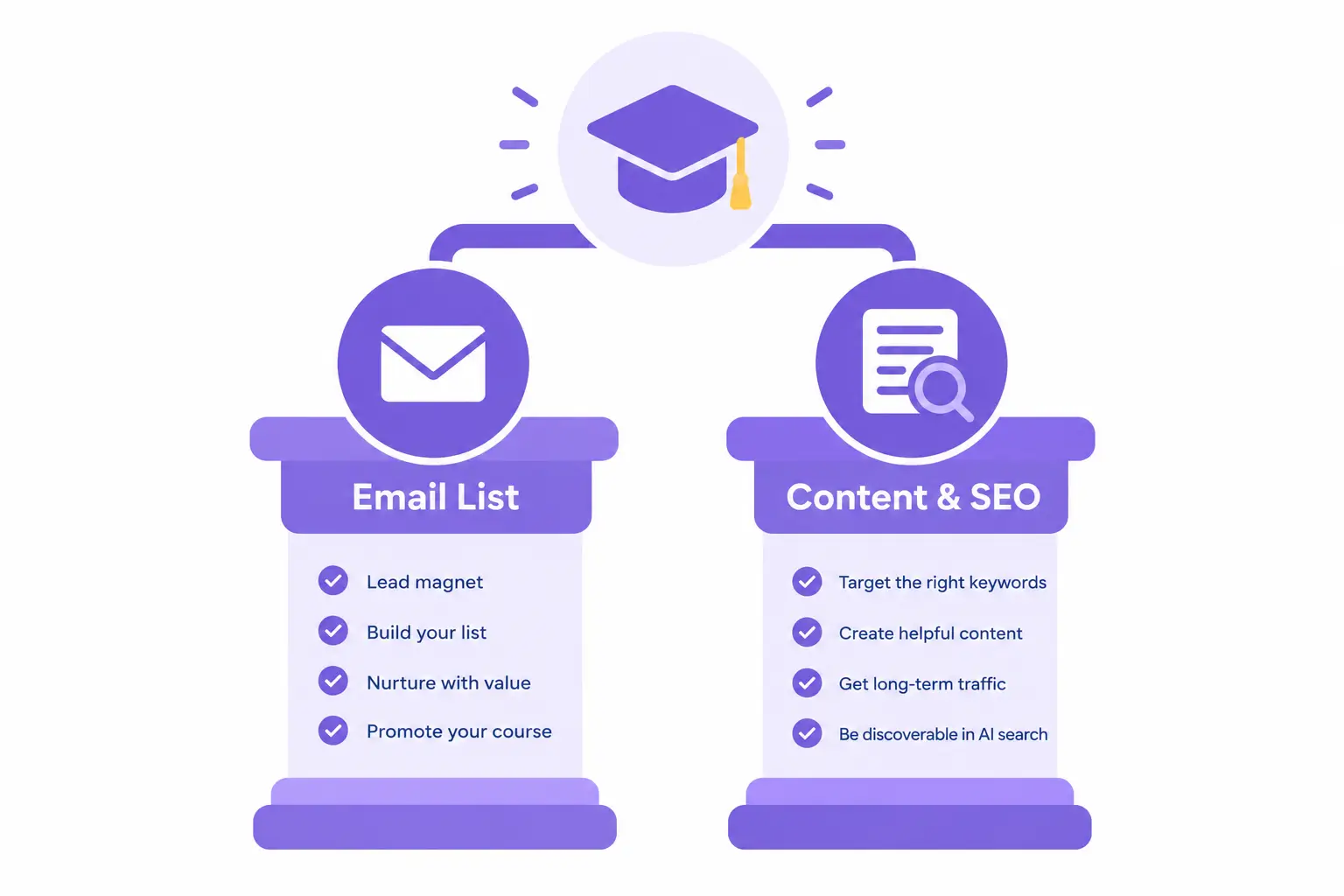
Email list
An email list is the one promotion channel that isn’t subject to an algorithm change overnight. Offer a genuinely useful lead magnet, a mini-guide, a short video training, a checklist, related to your course topic, in exchange for an email address, then nurture that list with real value before ever pitching the paid course.
Content and SEO, including AI search visibility
A well-optimized blog post keeps driving free, qualified traffic for years, unlike a social post that disappears in a day. Research the specific phrases your target students actually search, and build content around those, not just the topics you personally find interesting to write about.
What’s genuinely new for 2026: it’s no longer just about ranking in Google. Generative Engine Optimization (structuring content so tools like ChatGPT and Perplexity cite and recommend it when someone asks a related question) is becoming a real discovery channel alongside traditional search. Clear, well-structured, factually accurate content performs better in both places, which is a good reason to prioritize genuinely useful writing over keyword-stuffed filler.
3. Borrow Other People’s Audiences
Affiliate marketing
Give partners a unique referral link and pay them a commission only when a sale actually happens, which puts the financial risk on the outcome instead of on upfront spend. Provide affiliates with ready-to-use assets (banners, email copy, a coupon code) so promoting your course takes them minutes, not hours.
Influencer and educator collaborations
Partnering with a creator whose audience already overlaps with your ideal student gets your course in front of people who wouldn’t find it through your own channels. Look for genuine subject-matter alignment over raw follower count, a smaller, relevant audience converts better than a large, mismatched one.
Guest podcasting and guest blogging
Appearing as a guest on a podcast or publishing a guest article in your niche puts your expertise in front of an established, trusting audience. Both work because they borrow credibility the host or publication has already built, rather than asking a cold audience to trust you from scratch.
4. Paid and Time-Bound Tactics
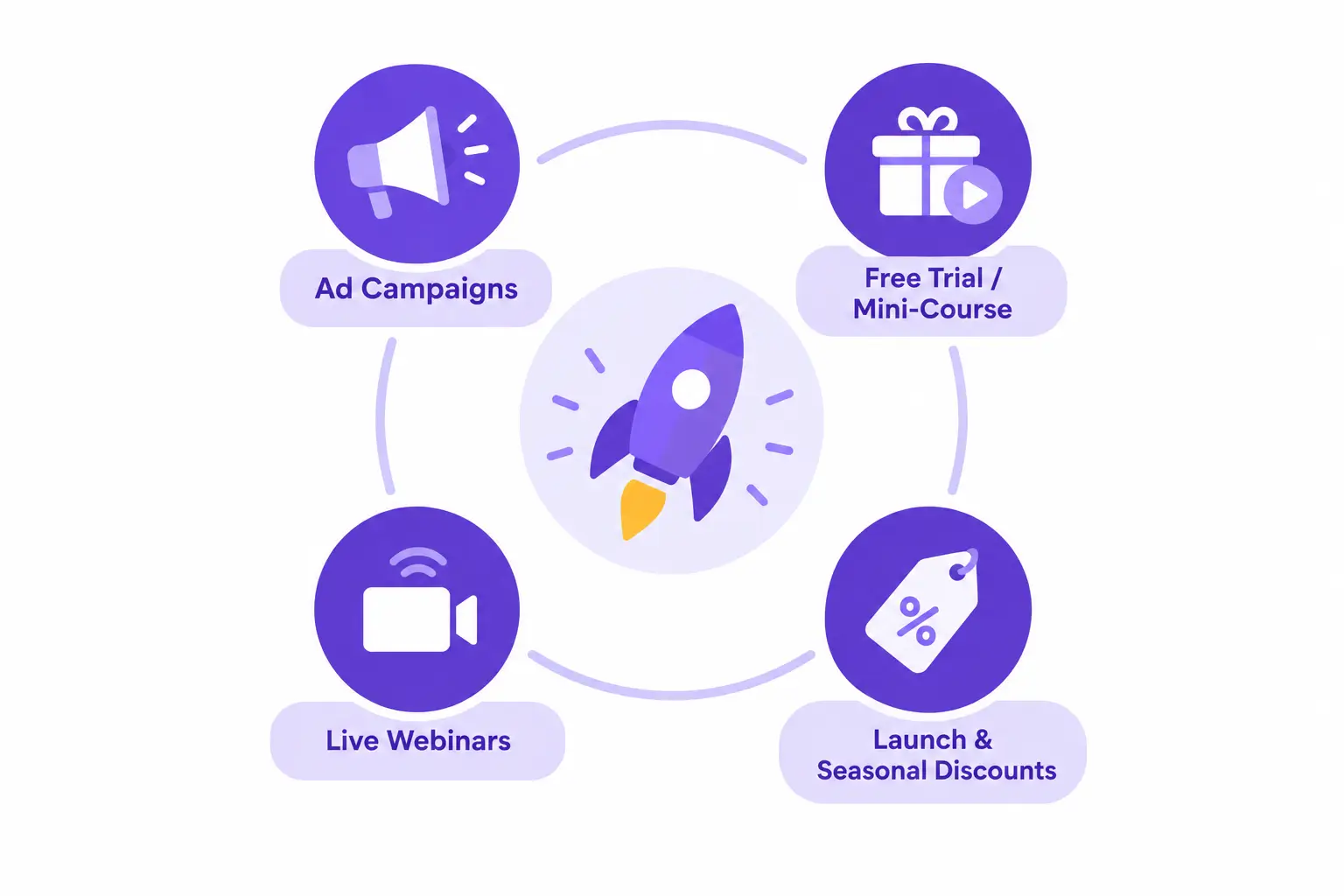
Ad campaigns
Paid ads (Google, Meta, or platform-specific) can produce fast, measurable results once you know which messaging already converts organically. Start with a small, targeted budget testing your best-performing organic content as an ad, rather than guessing at creative from scratch.
Free trial or mini-course
A short, genuinely useful preview of your course lowers the barrier to that first yes. It works because it lets a prospective student experience your teaching style and content quality before committing money, which builds more trust than any sales copy can.
Live webinars
A structured, 45–60 minute live session that teaches something real and ends with a clear offer remains one of the highest-converting promotion formats, largely because live interaction builds trust faster than pre-recorded content. Pair it with YouTube, which has over 2.7 billion monthly active users, for a recorded version afterward to keep generating views long after the live session ends.
Launch and seasonal discounts
Time-limited discounts (a pre-launch price, a seasonal promotion) create real urgency without permanently resetting what your course is worth. Keep discounts specific and time-bound rather than a constant, unlimited markdown, which trains prospective students to simply wait for the next one.
5. Turn Your Website Into a Conversion Engine
Traffic without a website built to convert it is wasted effort. A few pages matter most:
Frequently Asked Questions
What’s the single most effective way to promote an online course?
There isn’t one universal answer, it depends on where you’re starting. With no existing audience, borrowing reach through affiliates or influencer collaborations tends to move fastest. With an existing audience, an email list and content marketing typically outperform paid ads on cost per student.
How much should I spend on paid ads to promote my course?
Start small and test which messaging converts before committing a large budget. A modest daily spend testing your best-performing organic content as an ad will tell you more about what actually works than a large blind campaign.
Do I need a large following to sell an online course?
No. Many successful course launches come from creators with modest but highly engaged audiences, or by borrowing reach through affiliates and collaborations rather than a large personal following. Relevance to your specific niche matters more than raw audience size.
Is SEO still worth it for promoting a course in 2026?
Yes, and it now extends beyond Google. Well-structured, genuinely useful content still ranks in traditional search and increasingly gets cited by AI search tools like ChatGPT and Perplexity when someone asks a related question, giving well-written content two discovery channels instead of one.
Should I offer a free trial or mini-course before the paid version?
It’s one of the more effective conversion tools available, since it lets a prospective student experience your teaching style and content quality firsthand before paying. Keep it genuinely useful rather than a stripped-down teaser, a weak free preview can hurt trust more than having none at all.
How often should I run discounts on my course?
Sparingly, and tied to a specific reason (a launch window, a seasonal event), rather than constantly. Frequent, unlimited discounting trains prospective students to wait for the next sale instead of buying at full price, which undermines the course’s perceived value over time.