







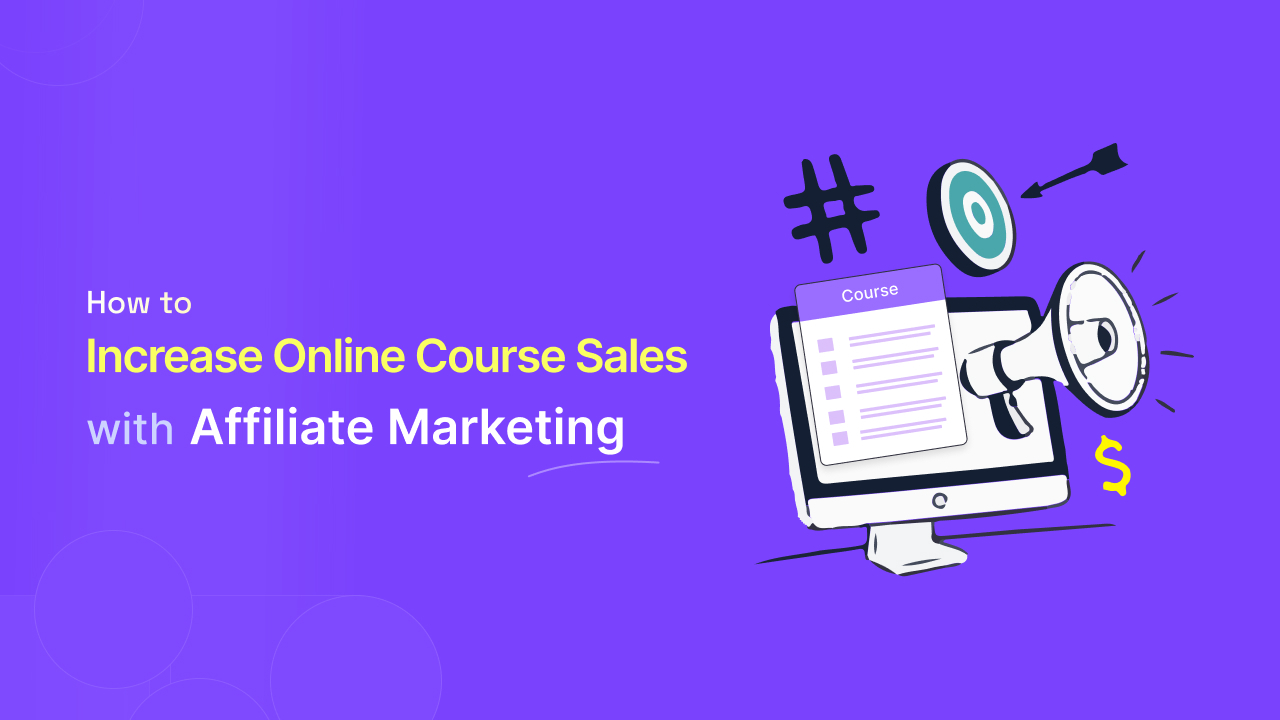

Selling online courses is easier than ever, but scaling sales consistently is where most course creators get stuck. Ads get expensive, organic reach takes time, and relying only on your own audience puts a hard ceiling on growth.
Affiliate marketing solves a specific piece of that problem: it turns other people’s audiences into your sales channel, and you only pay when a sale actually happens. It’s not a fringe tactic either, the global affiliate marketing industry is valued at roughly $18–22 billion in 2026, and 81% of brands worldwide now run some form of affiliate program. This guide covers how to actually set one up for an online course, and what to use to run it.
Quick Answer: How do I increase online course sales with affiliate marketing?
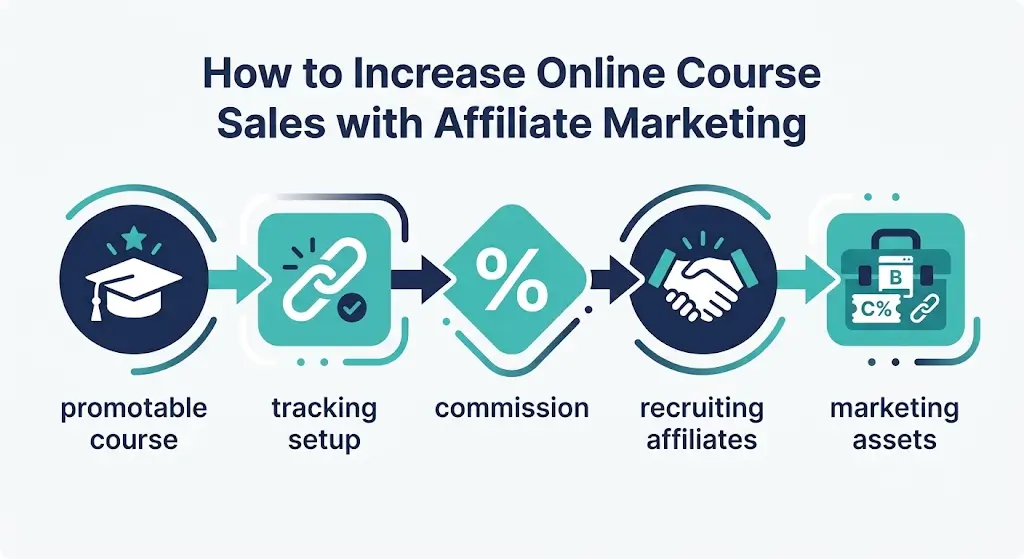
What Is Affiliate Marketing for Online Courses?
Online course affiliate marketing is a performance-based arrangement: you give partners (affiliates) a unique referral link, and whenever someone buys your course through that link, the affiliate earns a commission. It’s word-of-mouth marketing formalized and paid, instead of relying only on ads or your own existing audience, you let bloggers, educators, influencers, and even your own students recommend your course, and you only pay when it actually converts.
Why Affiliate Marketing Increases Online Course Sales
Affiliate marketing works because it converts trust into revenue. A recommendation from someone a potential student already follows carries more weight than an ad from a stranger, which is why affiliate-driven traffic consistently converts at a higher rate than cold advertising. You only pay commissions after a sale is made, which makes it close to risk-free compared to upfront ad spend, and with proper tracking in place, your affiliates stay motivated because they can see exactly what they’re earning.
How to Increase Online Course Sales with Affiliate Marketing
1. Build a Course That’s Actually Easy to Promote
Affiliate marketing only amplifies what’s already there, it can’t fix a course that’s hard to sell. Before recruiting affiliates, make sure your offer communicates value clearly:
This is the stage where course-building tools matter most. Academy LMS‘s Course Builder and Certificate Builder help you package a course that looks professional and complete, structured lessons, assessments, and a verifiable completion certificate, which gives affiliates a stronger, more credible product to promote in the first place.
2. Set Up an Affiliate System on Your Own Site
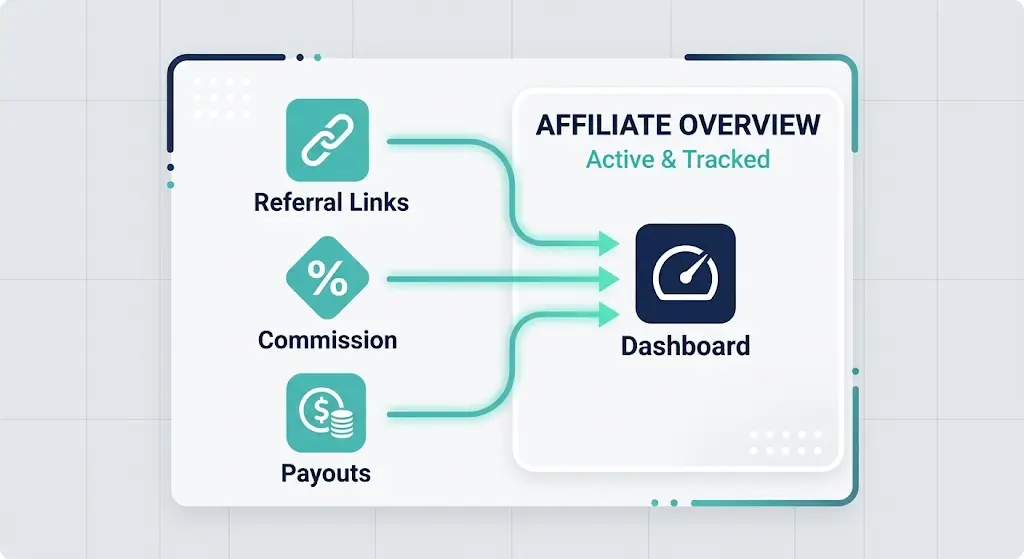
Once your course is ready, you need a way to generate referral links, track who sent which sale, and pay commissions, without doing it manually in a spreadsheet. If you’re already selling your course through StoreEngine, it includes a built-in affiliate system: you can create a referral program, manage affiliates and track their commissions from one dashboard, and monitor referral activity without adding a separate third-party affiliate tool. Affiliates get a unique link, and every sale attributed to it is tracked automatically.
Running the affiliate system on the same platform as your checkout keeps everything in one place, commission data, payouts, and course sales, instead of syncing two separate systems and hoping the numbers match.
3. Set a Commission Rate That Actually Motivates Affiliates
Commission rate is the single biggest lever for how many affiliates bother promoting you. A common starting point is around 30%; brand-new course creators with no track record often need to offer more to compete for attention. Jeff Walker, one of the best-known names in online course marketing, offers a 40% affiliate commission on his flagship course, which reflects how competitive commission rates can get in a crowded niche.
A simple per-product commission rate is enough to start. More complex structures, tiered rates for top performers, or bonuses during a launch window, are worth adding later once you can see which affiliates are actually driving sales.
4. Recruit Affiliates Who Already Have Your Audience
5. Give Affiliates Assets They Can Use Immediately
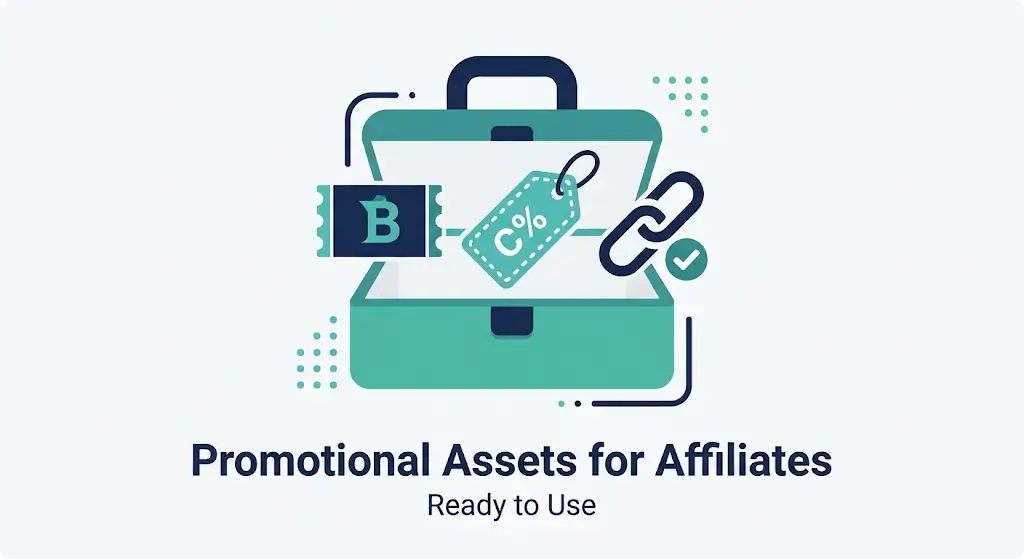
Affiliates promote more, and promote better, when they don’t have to create their own materials from scratch. Provide a unique coupon code (StoreEngine’s coupon system supports this directly), a banner or two, and a short description they can drop straight into an email or social post. The less friction between “I want to promote this” and “I’m actually promoting this,” the more consistently your affiliates will follow through.
Putting It Together
Affiliate marketing for online courses isn’t a single setting you turn on, it’s a course worth promoting, a tracking system that doesn’t require manual spreadsheet work, a commission rate that’s actually competitive, and a steady process for recruiting the right partners. Get the course and the tracking system right first; recruiting and commission tuning are the parts you’ll keep refining over time.
Frequently Asked Questions
1. How much commission should I offer course affiliates?
30% is a reasonable starting point for most course creators. Newer or unproven course brands often need to offer more, sometimes 40% or higher, to compete for affiliates’ attention, since established creators can rely on brand recognition that a new course can’t yet.
2. Do I need a separate affiliate marketing tool, or can I run it from my own store?
You can run it from your own site if your ecommerce or LMS plugin supports it. StoreEngine, for example, includes a built-in affiliate system with referral links, commission tracking, and a management dashboard, which avoids paying for and syncing a separate third-party affiliate platform.
3. What’s the best way to find affiliates for an online course?
Start with your own students, they already know the course delivers results and are naturally credible promoters. Beyond that, look for bloggers, educators, and content creators already active in your course’s specific subject area, since their existing audience is already primed for that topic.
4. How is affiliate marketing different from running paid ads for a course?
With paid ads, you pay for clicks or impressions regardless of whether they convert. With affiliate marketing, you only pay a commission after an actual sale happens, which shifts the financial risk from you to the outcome itself. Affiliate traffic also tends to convert better since it arrives via a trusted recommendation rather than a cold ad.
5. Should I let my own students become affiliates?
Yes. Students who’ve completed and benefited from your course are often the most credible promoters available, since their recommendation carries firsthand experience that no outside affiliate can match.
6. How big is the affiliate marketing industry in 2026?
Estimates vary by source, but most place the global affiliate marketing industry between $18 and $22 billion in 2026, with 81% of brands worldwide running some form of affiliate program and affiliate-driven purchases accounting for roughly 16% of all US ecommerce orders.