








Most guides to online teaching read like a pep talk: flexibility, global reach, passive income, repeated in slightly different words across ten sections. None of that is wrong, but it skips the part that actually determines whether someone succeeds: which of the three ways to teach online they pick, and whether they understand what each one costs them in control, revenue share, or time.
Online teaching in 2026 isn’t one thing. Tutoring a stranger through a platform, selling a course on a marketplace, and running your own course website are three completely different businesses that happen to share the word “teaching.” They have different startup costs, different revenue ceilings, and different amounts of ownership over what you build.
This guide walks through what online teaching actually involves right now: the market size, the equipment you genuinely need, the three paths to getting paid, what’s changed because of AI, and the mistakes that quietly stall most people in their first few months.
Quick Answer: What do I need to know before teaching online in 2026?
At minimum: a stable internet connection, a decent microphone, and a plan for how you’ll get paid. Beyond that:
What Is Online Teaching, Exactly?
Online teaching is instruction delivered over the internet instead of in a physical classroom, spanning live one-on-one video sessions, group webinars, and fully self-paced recorded courses. The format ranges from real-time tutoring to a pre-recorded curriculum a student works through on their own schedule.
The subjects taught skew toward business, technology, languages, and creative skills, but the format itself has no real subject limit. If a skill can be explained, demonstrated, or assessed, it can be taught online, from spreadsheet modeling to pottery.
How Big Is the Online Teaching Market Right Now?
The numbers vary by research firm depending on what’s counted, but the direction is consistent. Grand View Research puts the global e-learning services market at roughly $353 billion in 2025, projecting growth to $1.49 trillion by 2033 at a compound annual growth rate near 20%. Blended learning, which combines live and self-paced instruction, already leads the market by delivery method.
The retention data is arguably more useful for anyone deciding whether to teach this way at all. Online learners retain 25% to 60% more material than students in a traditional classroom, largely because self-paced formats let students revisit material and control their own speed.
|
Metric |
2026 figure |
|
Global e-learning services market (2025 baseline) |
~$353 billion |
|
Projected market by 2033 |
~$1.49 trillion |
|
Market CAGR (2026–2033) |
~19.9% |
|
Retention advantage vs. traditional classroom |
25%–60% higher |
|
Organizations using some form of digital learning |
~90% |
What You Actually Need Before Your First Class
The technical bar for teaching online is lower than most people assume, but a few things genuinely matter:
Beyond that, expensive equipment is optional. Camera quality, ring lights, and studio setups help polish, but they’re not what determines whether students finish a course or come back for another session.
The Three Ways to Actually Get Paid Teaching Online
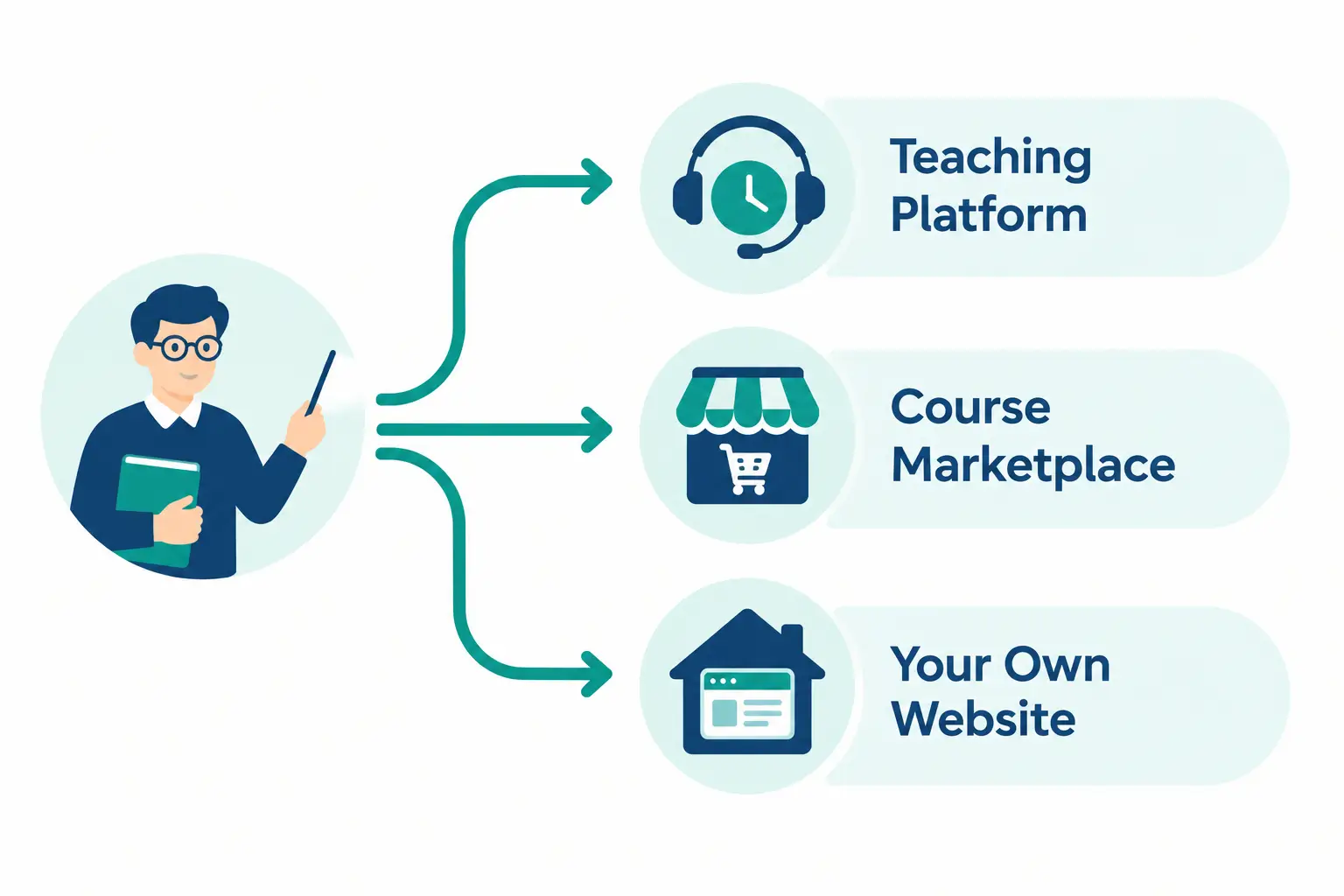
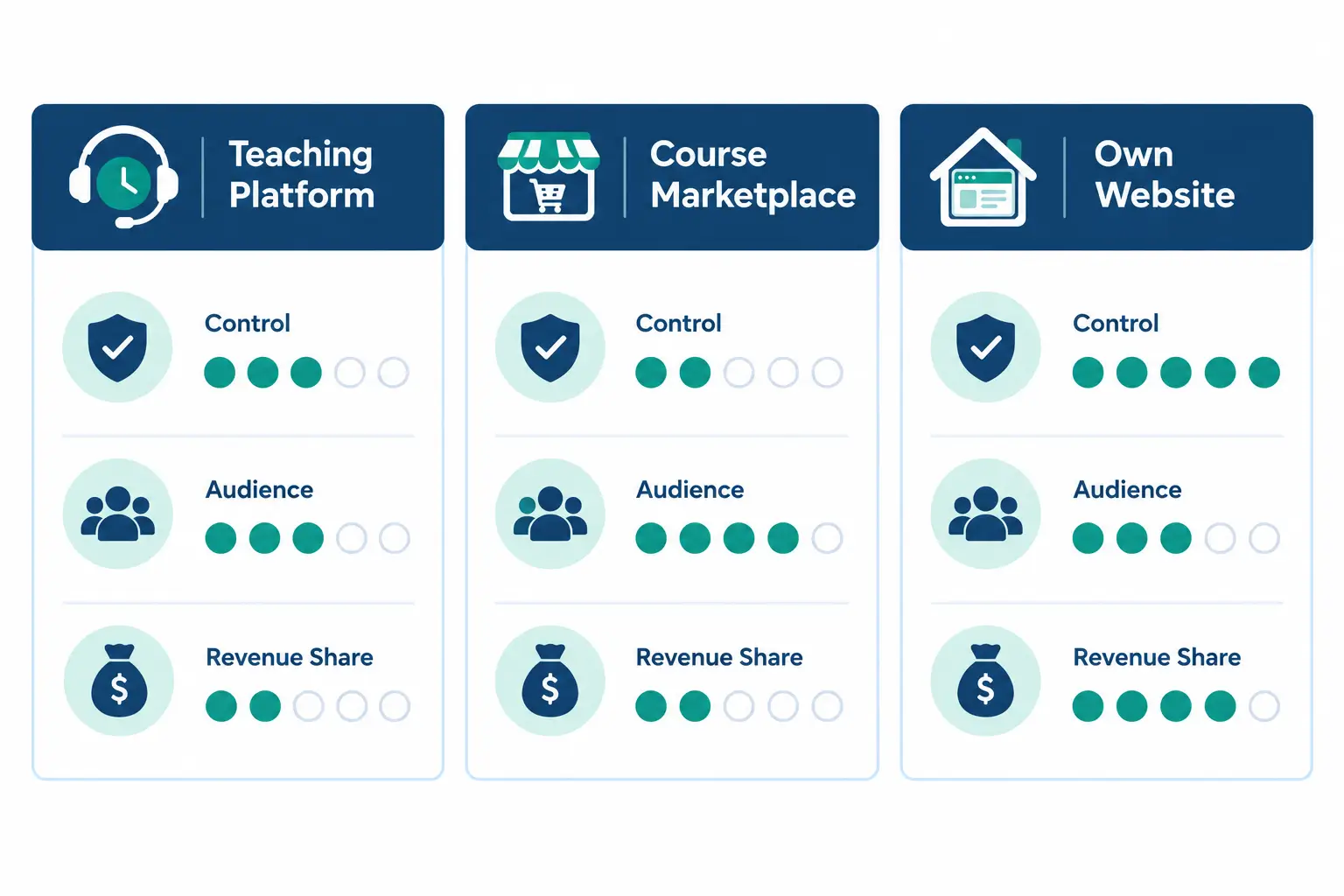
This is the decision that shapes everything else, and most guides gloss over it. Each path trades control for convenience differently.
Teaching platforms (hourly, managed for you)
Services like Tutor.com, Skooli, and TutorMe connect you with students directly and pay per session or per hour. You bring the expertise; the platform brings the students, the scheduling, and the payment processing. In exchange, you get little control over pricing, branding, or the student relationship, and your income caps at your available hours.
Course marketplaces (built-in audience, revenue share)
Platforms like Udemy and Skillshare let you upload a self-paced course to an existing audience of millions. This solves the discovery problem instantly, but marketplaces control pricing (Udemy’s frequent discounting is well known among course creators) and take a meaningful revenue cut, sometimes the majority of a sale, depending on how the student found the course.
Your own website (full ownership, more setup)
The third path is building a course website you fully control, using WordPress as the foundation and a dedicated learning management plugin to handle enrollment, lessons, quizzes, and certificates. This is the option most guides underexplain, because it requires more setup than signing up for a platform, but it’s also the only path where the pricing, the student data, and the brand are entirely yours, with no revenue share going to a third party.
Building a Course Website You Actually Own
For anyone choosing the third path, the setup is more approachable than it sounds: WordPress as the website foundation, plus a course-management plugin that handles the parts a training site needs. Academy LMS is one plugin built specifically for this, and walking through what it covers is a useful way to see what a real course website setup involves.
The Course Builder handles lessons, quizzes, and assignments through a drag-and-drop interface, with drip-content scheduling so material releases over time instead of all at once. The Quiz Builder supports six question types, from multiple choice to image-based answers, for assessing more than surface-level recall. Live Classes integrates with Zoom and Google Meet for cohort-based teaching, and the Certificate Builder issues branded certificates with a unique verification ID on course completion.
What matters most for a new online teacher isn’t any single feature, it’s that all of this runs from one dashboard, on a site you own, without paying a percentage of every sale to a marketplace.
The AI Shift: What Changed in Online Teaching in 2026
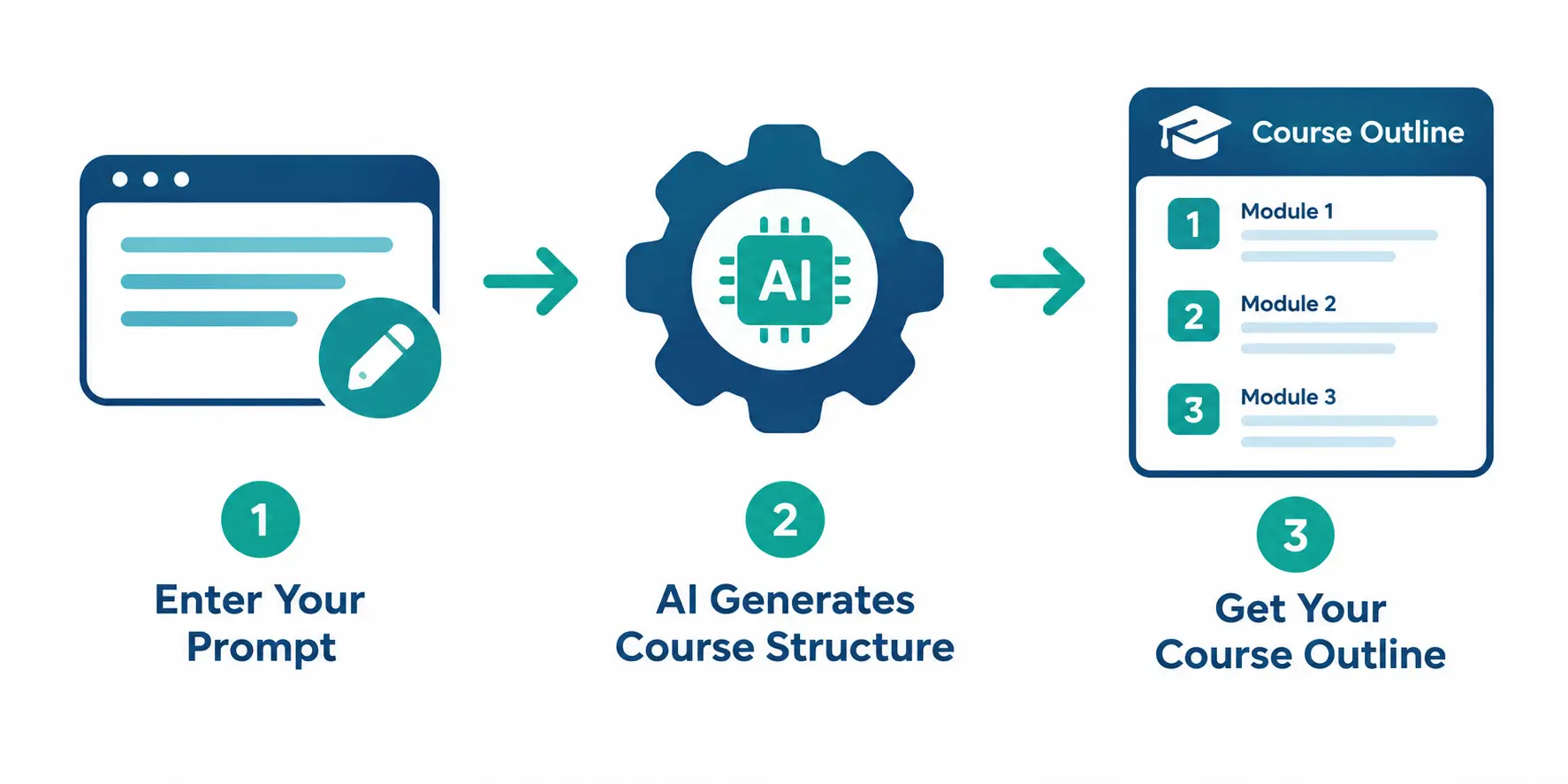
The biggest practical change in the last two years isn’t a new teaching format, it’s how fast a first draft of a course comes together. Tools like Academy LMS’s AI Studio connect to OpenAI directly inside the course dashboard, generating a full course outline, lesson content, quiz questions, and even a course thumbnail from a single prompt. That doesn’t replace the expertise a teacher brings, but it collapses the blank-page problem that used to stall people for weeks before they published anything.
Adaptive learning is following a similar curve. The adaptive learning market is projected to reach $9.11 billion by 2027, as personalized learning paths that adjust to individual student pace become standard rather than a premium feature.
The practical takeaway for a new online teacher: use AI to get a course structure and first draft in place fast, then spend your actual time on the parts AI can’t do, worked examples from real experience, feedback on student work, and the judgment calls about what to cut.
Mistakes That Quietly Kill New Online Teachers
A few patterns show up constantly in people who stall out in their first few months:
How to Actually Launch
Which Path Should You Actually Choose?
Frequently Asked Questions
Do I need a teaching certification to teach online?
Not for most independent teaching or course-creator paths, expertise and the ability to explain it clearly matter more. Specific niches, like teaching English professionally on some platforms, do require certifications such as a TEFL, so check the requirements of your chosen platform or market.
How much equipment do I actually need to start?
Less than most people assume: a stable internet connection, a $30–$50 USB microphone, a quiet room, and a laptop or tablet capable of running video calls. Camera quality and studio setups are nice upgrades, not requirements.
Which pays better, a teaching platform, a marketplace, or my own website?
Your own website has the highest revenue ceiling, since there’s no ongoing platform cut, but it also takes the most setup time before you see your first sale. Teaching platforms and marketplaces get you paid faster with a built-in audience or client base, in exchange for a revenue share or an hourly cap.
Can AI actually build my course for me?
AI tools can generate a solid first-draft course outline, lesson content, and quiz questions in minutes, which removes the blank-page problem. It can’t replace your real-world examples, subject expertise, or the judgment calls about what to include, so treat AI output as a draft to edit, not a finished product.
What’s the biggest mistake new online teachers make?
Launching a course the same day it’s announced, without giving potential students time to notice and consider it. A short pre-launch runway of teasers and updates consistently performs better than a same-day announcement-and-launch.
Is it too late to start teaching online in 2026?
No. The global e-learning services market is still growing at close to 20% a year, and new subject niches keep opening as the format matures. The opportunity has shifted from “get in early” to “pick a specific enough niche and format to stand out,” which is a different challenge, not a closed door.