












The eLearning landscape continues to evolve, driven by technology, innovation, and changing learner needs. As we move into 2025, new trends are set to redefine online education and training, offering businesses, educators, and learners groundbreaking opportunities to enhance their experiences.
To achieve and surpass growth expectations, the integration of technology, innovation, and research is essential. Staying informed about the latest eLearning trends in 2025 is crucial for leveraging its full potential.
In this article, we will explore the latest eLearning trends for 2025. If you’re an eLearning enthusiast, entrepreneur, or professional in this industry, understanding these emerging trends will help you stay ahead of the curve.
eLearning Trends for 2025
The eLearning industry in 2025 is set to evolve further with advancements in technology and shifting learner preferences. Artificial intelligence (AI) will play a pivotal role, offering personalized and adaptive learning paths. AI-powered chatbots and virtual tutors will enhance support and provide real-time feedback, making learning more efficient and targeted with Academy LMS.
Virtual reality (VR) and augmented reality (AR) will become even more integral, enabling highly immersive and practical training experiences. From virtual labs to interactive 3D simulations, these technologies will bridge the gap between theoretical knowledge and real-world application.
The reliance on mobile learning will continue to grow, driven by the increasing demand for on-the-go access. Mobile-first platforms will deliver responsive designs, push notifications, and offline capabilities, ensuring seamless learning experiences anytime and anywhere.
Gamification will advance with personalized challenges and collaborative features, keeping learners engaged through dynamic rewards systems. Social learning will also expand, incorporating tools like virtual classrooms and peer-to-peer knowledge sharing to foster community-driven education.
These trends will redefine eLearning trends in 2025, focusing on personalization, engagement, and flexibility to deliver impactful learning experiences.
Personalized AI-Driven Learning
Artificial intelligence in eLearning is moving beyond basic automation. In 2025, AI-powered platforms will create highly personalized learning paths for each user. These systems will analyze learners’ behavior, skills, and progress to adapt content delivery, ensuring that every user gets the most effective learning experience.
Key highlights:
- Advanced predictive analytics to track and optimize learning outcomes.
- Real-time feedback and guidance.
- AI tutors for 24/7 support.
AI-assisted data analytics will empower educators to make more informed decisions about course design and student progress tracking. AI-powered tools can analyze large datasets quickly and accurately, providing educators with valuable insights and recommendations.
AI-assisted adaptive learning systems will be able to provide personalized learning experiences, adjusting the difficulty and pace of learning based on the student’s performance. AI-enabled tools will be able to detect and handle errors in real-time, increasing the efficiency and accuracy of the learning process.
AI-powered intelligent agents will be able to provide automated support, such as answering student queries, providing resources, and helping to guide students through
Immersive Experiences with VR and AR
Virtual and augmented reality technologies are set to take eLearning to the next level by offering hands-on, interactive experiences. Imagine medical students practicing surgeries in a VR lab or engineers troubleshooting virtual machinery.
Advantages:
- Increased learner engagement and retention.
- Realistic simulations for skill-based training.
- Safe environments for practicing high-risk tasks.
Students will get a more realistic and engaging learning experience through VR-enabled eLearning platforms. The training scenarios will be able to provide a safe and engaging environment as well. So students will be able to practice and improve their skills more flexibly. VR-enabled simulations will provide more realistic and practical experiences that are impossible to get in a traditional learning environment. Moreover, VR-based assessments can provide more accurate and reliable data on student performance.
Students can learn at their own pace in a VR-enabled eLearning platform. Therefore, the eLearning trend will be more flexible and reliable. Additionally, student progress and performance will be revealed in real-time, allowing for a more effective and efficient learning environment.
Learning in the Flow of Work
Employees often prefer learning that seamlessly integrates into their daily routines. In 2025, eLearning trends will focus on delivering bite-sized lessons through workplace tools like Slack, Microsoft Teams, and other productivity platforms.
Why this matters:
- Enhances productivity through just-in-time training.
- Reduces time away from work.
- Makes learning immediately applicable.
Mobile-First eLearning Platforms
With the increasing reliance on smartphones, mobile-first eLearning trends will dominate. These platforms will be optimized for small screens, offering responsive designs and intuitive interfaces.
Features to expect:
- Push notifications for reminders and updates.
- Offline learning options.
- AI-powered mobile apps for tailored content.
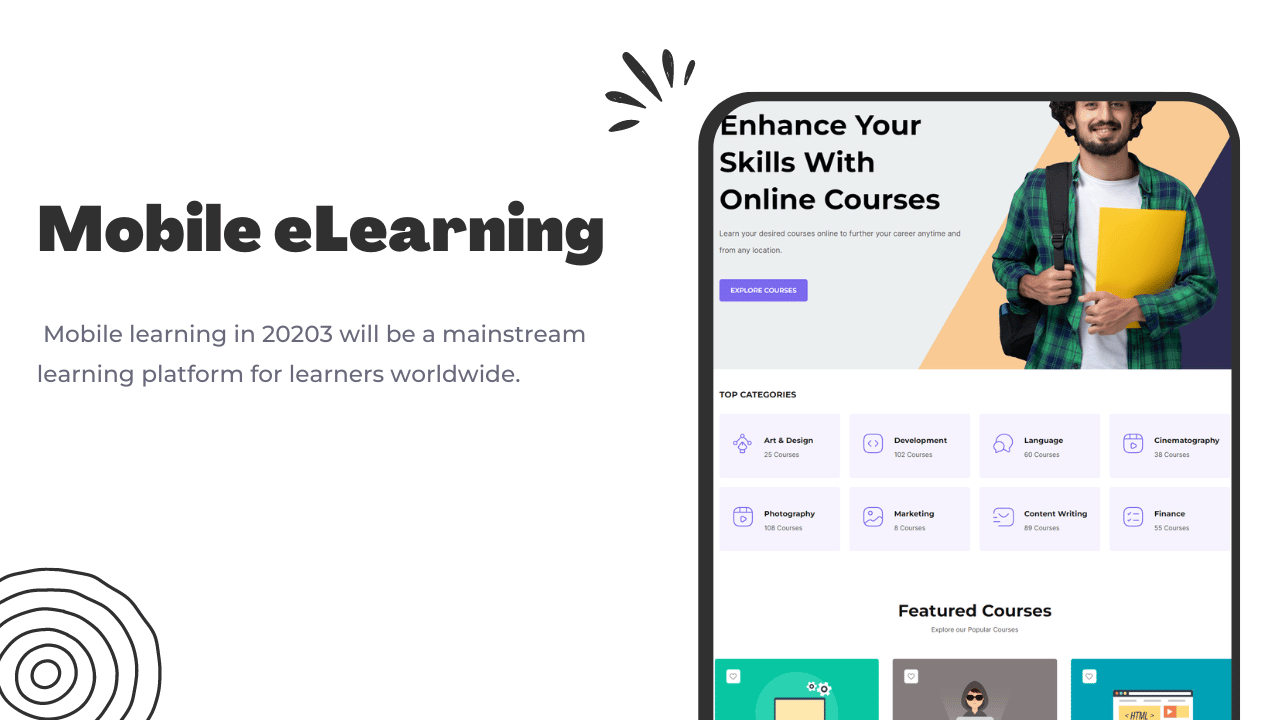
Mobile eLearning platforms in 2025 will feature intuitive interfaces and advanced functionalities. The integration of AI will take interactivity to the next level, adapting content dynamically to match individual learning styles, preferences, and progress. These platforms will offer data-driven insights to track student performance, making it easier to provide tailored recommendations for improvement.
Learning via mobile devices will go beyond engagement, emphasizing accessibility and inclusivity. AI-driven translations, voice commands, and offline capabilities will cater to diverse learner needs, ensuring no one is left behind. Professionals, students, and educators will leverage these advancements to acquire skills and stay updated in their respective fields.
As the pace of technological innovation accelerates, mobile eLearning trends will remain a cornerstone of modern education, empowering learners to stay ahead in an increasingly competitive world.
LMS Implementation To Enhance Career Development
With the help of the learning management system, eLearning trends was digitized, and we have seen the next generation of learning platforms. It serves as the foundation for all eLearning trends because of its capacity for deployment, administration, data collection, and planning. However, the most recent upgrades have improved it much more.

Now that LMS has a training profile and skill evaluation, it may help with HRM. It may examine a worker’s performance, previous and current learning accomplishments, and recommendations for more training.
A learning management system allows employers to deliver interactive learning opportunities that are tailored to the individual. It can also provide a way to track and monitor employee progress, ensuring employees receive the training and development they need.
These recommendations may help you identify which individuals are most suitable for leadership roles so you can appropriately plan those employees’ career development.
Data-Powered Learning Insights
2025 will see a surge in data-driven strategies in eLearning. Platforms will use learning analytics to provide actionable insights for both learners and educators.
What’s new:
- Predictive tools to improve course completion rates.
- In-depth performance tracking.
- Identifying learning gaps.
The L&D industry is analogous. In fact, data conversions usually begin in learning and development (L&D), especially when helping modern learners who want specialized and individualized learning methods.
Additionally, it will provide each profile with a critical evaluation so that trainers may discover the profiles’ strengths and flaws. Using this information, they may create individualized classes that allow students to progress at their own speed and so improve information retention.
Microlearning for Faster Retention
Short, focused lessons will continue to grow in popularity. Microlearning modules are ideal for busy professionals and students looking to learn quickly and efficiently.
Key benefits:
- Ideal for mobile platforms.
- Easy to digest content.
- Higher retention rates.
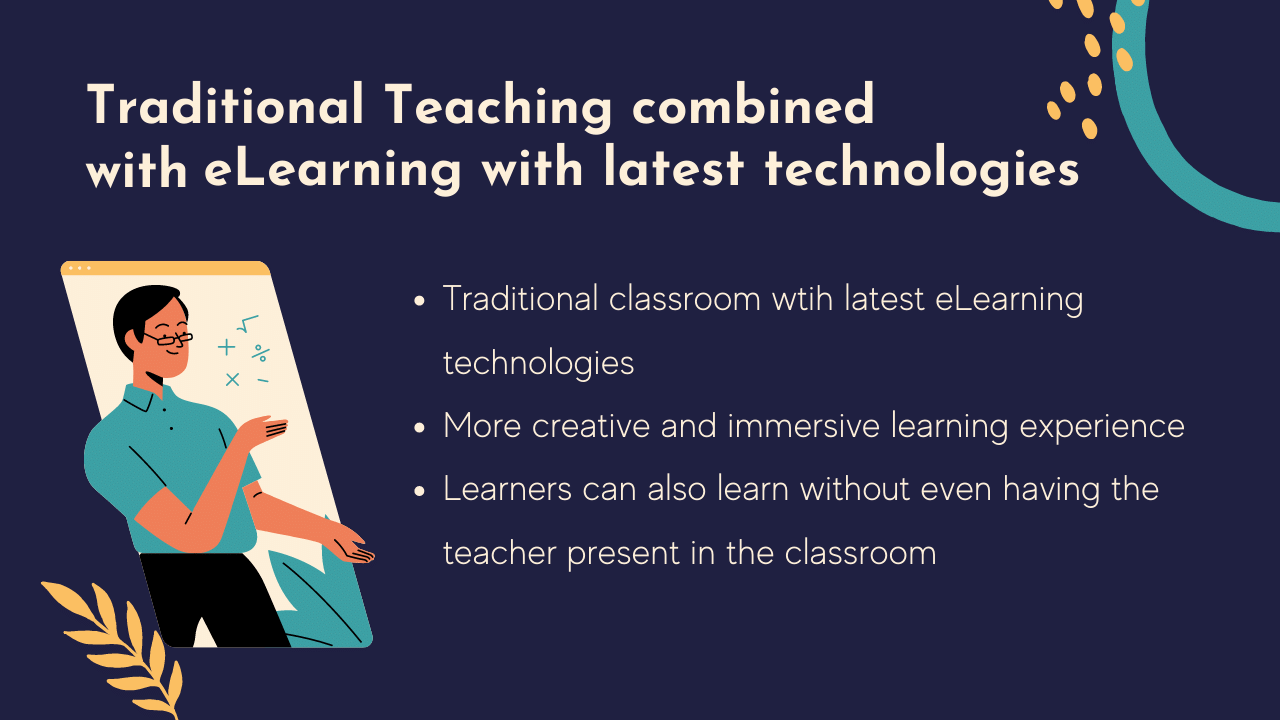
For students, blended learning will provide more opportunities to learn at their own pace while accessing diverse course materials from anywhere. With AI-powered customization, learners can tailor their educational journey to suit their individual needs and interests, enhancing engagement and retention.
For educators, blended learning will become a more powerful tool for monitoring student progress and providing personalized instruction. AI-driven analytics will enable educators to identify gaps in learning and adapt teaching strategies in real time.
The components of blended learning in 2025 will extend beyond traditional formats. Virtual tools like AI-driven simulations, augmented reality experiences, and adaptive digital assessments will create immersive and interactive learning environments. Virtual field trips and collaborative online projects will allow students to explore real-world scenarios and develop critical thinking skills.
As more educational institutions embrace blended learning, this approach will become a cornerstone of modern education, fostering innovation, accessibility, and student-centered learning experiences. The evolution of blended learning in 2025 will ensure it remains at the forefront of effective educational strategies.
Gamification 2.0
Gamification in eLearning will become more sophisticated in 2025, moving beyond simple rewards. Advanced features like AI-driven challenges and personalized leaderboards will make learning more engaging.
Upcoming trends in gamification:
- Virtual rewards integrated with real-world benefits.
- Dynamic challenges tailored to user performance.
- Collaborative team-based games.
Additionally, gamified eLearning will include various levels of difficulty and challenges. That is because the challenges will ensure that learners are always pushed to their limits. It will help learners to stay engaged and motivated even after they have reached the end of the course.
Learners can also track their progress and get feedback on their performance. This will surely further their sense of accomplishment.
eLearning Trends Through Social Platforms
As sustainability becomes a global focus, eLearning platforms are expected to adopt eco-friendly practices. Paperless courses, energy-efficient hosting, and promoting green skills will be key trends in 2025.
Why it’s important:
- Prepares learners for green job opportunities.
- Reduces environmental impact.
- Supports companies’ sustainability goals.
Through social media, learners and educators can maintain better communication. Social media will be used to post assignments, create discussion forums, and share resources.
Learners can interact with one another by commenting and sharing on social media. This way, learners and an eLearning group can foster engagement and collaboration.
Sustainability in eLearning
As sustainability becomes a global focus, eLearning platforms are expected to adopt eco-friendly practices. Paperless courses, energy-efficient hosting, and promoting green skills will be key trends in 2025.
Why it’s important:
- Reduces environmental impact.
- Supports companies’ sustainability goals.
- Prepares learners for green job opportunities.
Final Thoughts on Future eLearning Trends
2025 promises to bring significant advancements in eLearning, powered by AI, immersive technologies, and data-driven strategies. By adopting these trends, educators and businesses can deliver meaningful, engaging, and effective learning experiences.
Stay ahead by aligning your eLearning initiatives with these innovations and providing learners with the tools they need for success.