










If you teach online, you’ve felt this pain. You spend months building a course. You launch it. Sales pour in for two weeks. Then they slow down. Then they stop. And you’re back to square one. Building, launching, hoping.
We’ve watched many course creators ride this wave. Some gave up after a few rounds. The smart ones did something different. They turned their courses into a subscription. Not a one-time buy. A monthly or yearly plan. And their income changed forever.
That’s the power of subscription models for online courses. They flip your business from feast-or-famine to steady, growing revenue. They turn buyers into members. And they pay you while you sleep, every single month.
In this post, I’ll show you how subscription models for online courses really work. The different ways to set them up. The numbers behind why they win. The top 6 tools to use. And the soft spots to watch out for.
Why Course Creators Are Moving to Subscriptions
The old way was simple. Build a course. Sell it for $497. I hope a thousand people buy it. Then build another one and start over.
The problem? Most creators get fifty buyers, not a thousand. The marketing cost to get each new buyer keeps going up.
Subscription models for online courses solve this. You should offer your service for $29 per month instead of asking customers to pay $497 as a single payment.
The buyer says yes faster. People who join the group will maintain their membership throughout multiple months. Let’s do the math. The sale of one item priced at $497 generates $497 in revenue. One $29-a-month subscriber who stays for 18 months brings in $522.
The average duration for subscription members to stay on board according to research conducted by a well-known learning platform spans from 9 to 14 months. Each one is worth far more than a one-time buyer.
The recurring revenue of course creators who moved from single payment sales to monthly subscription plans increased by 3 to 5 times during their first year of business. The task requires substantial physical effort to complete. The organization operates under an unrelated commercial enterprise.
Three Real Ways Subscription Models for Online Courses Work
There’s no one “right” way to run a subscription course business. Here are the three we see work best.
1. The All-Access Library
You build a library of many courses. Buyers pay one monthly fee and get access to all of them. New courses get added each month. Cancel anytime. This is what places like Skillshare and MasterClass do. Best for creators with many courses.
2. The Monthly Cohort
You sell a course where new lessons drop every month. Buyers pay monthly to keep getting fresh content. They also get a private community, live calls, or coaching. Works great for fast-moving topics like marketing, coding, or AI. Best for creators in fast-moving fields.
3. The Membership Tier
You give your course away cheap or free. The real product is the community, support, and live access behind a monthly fee. The course itself is just the door. Best for creators with strong personal brands or niche communities.
All three turn one-time buyers into long-term members. That’s why subscription models for online courses keep winning.
What You Need to Make Subscription Courses Work
Switching to a subscription model is more than just a price change. You need a few things in place.
A Real Reason to Stay
Buyers cancel when there’s no fresh value. So you need to feed them. New lessons each month. Group calls. A private community. Something that makes them open your emails and log back in.
If your course is “set it and forget it,” subscriptions won’t work.
A Strong Onboarding
The first 14 days are everything. If a new member signs up and gets lost, they cancel. So set up a simple welcome flow. Day 1: welcome video. Day 3: first lesson. Day 7: invite to the community. Day 14: check-in email.
Strong onboarding boosts member retention more than any fancy feature.
The Right Tech Stack
Here’s where many course creators trip up. They try to glue together five different tools. WordPress. WooCommerce. A course plugin. A subscription plugin. A community tool. And nothing talks to each other nicely.
The trick is to pick tools that play well together. AcademyLMS is a great course tool that works inside WordPress. Pair it with a subscription plugin that fits, and you have most of the puzzle done for running subscription models for online courses.
Top 6 Subscription Plugins for Course Creators
Below are five subscription plugins I’ve seen power great subscription models for online courses. My top pick comes first.
1. WPSubscription (Our Top Pick)
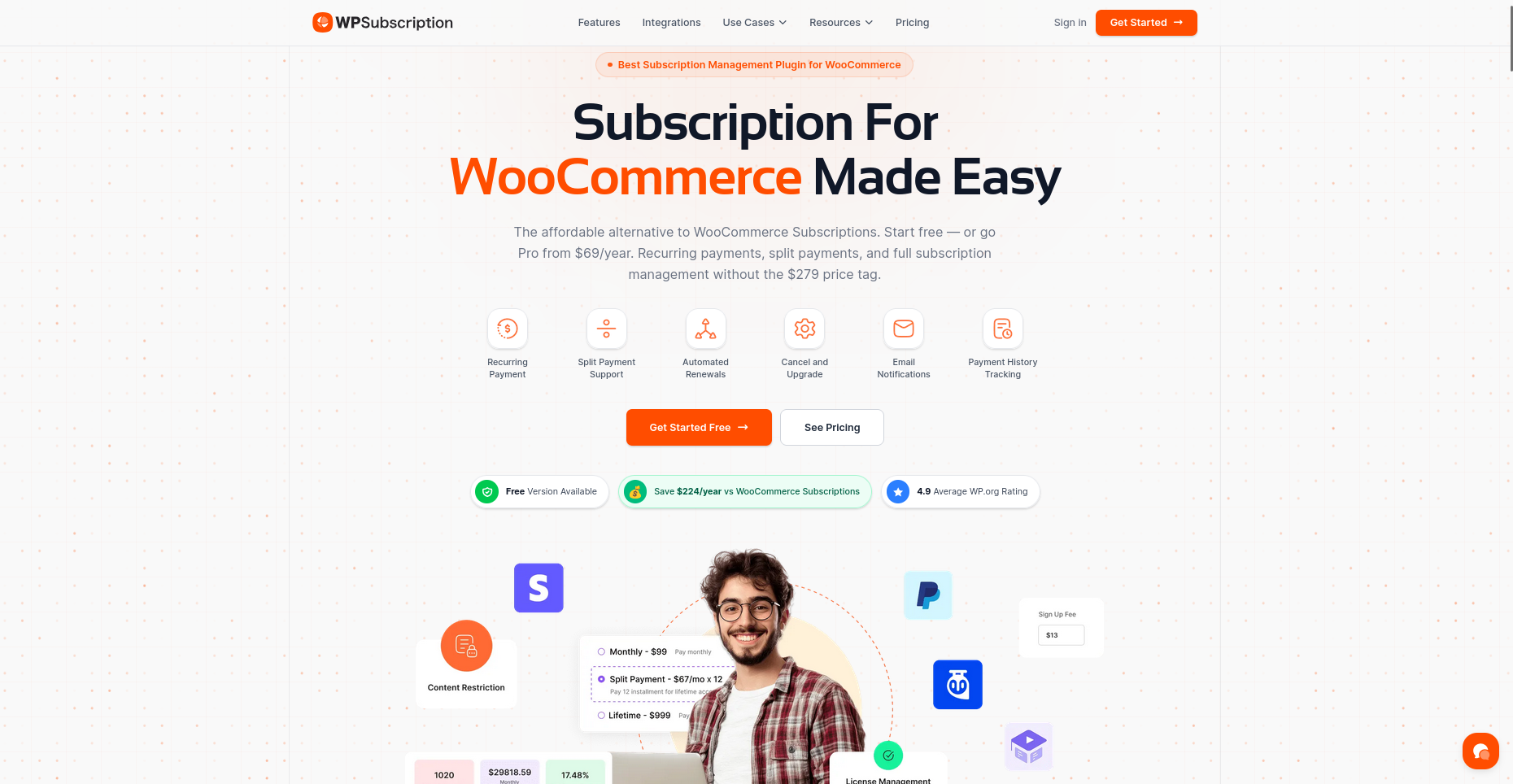
WPSubscription is a WooCommerce-based subscription plugin built by the team at Converse Lab. Modern, affordable, and feature-rich.
Main Features:
- Recurring billing in daily, weekly, monthly, or yearly cycles
- Free trials and one-time sign-up fees
- Split payment option for big course prices
- Auto user role assignment for locking course content
- Customer self-service dashboard
- Stripe, PayPal, Paddle, Razorpay, and more
Pros:
- Most affordable on this list ($69/year Pro plan)
- Free version on WordPress.org has real value
- Works great with AcademyLMS
- Split payments help sell higher-priced courses
Cons:
- Newer than older plugins
- Some niche add-ons still being built
For most course creators, WPSubscription hits the sweet spot of price and features.
2. ARMember
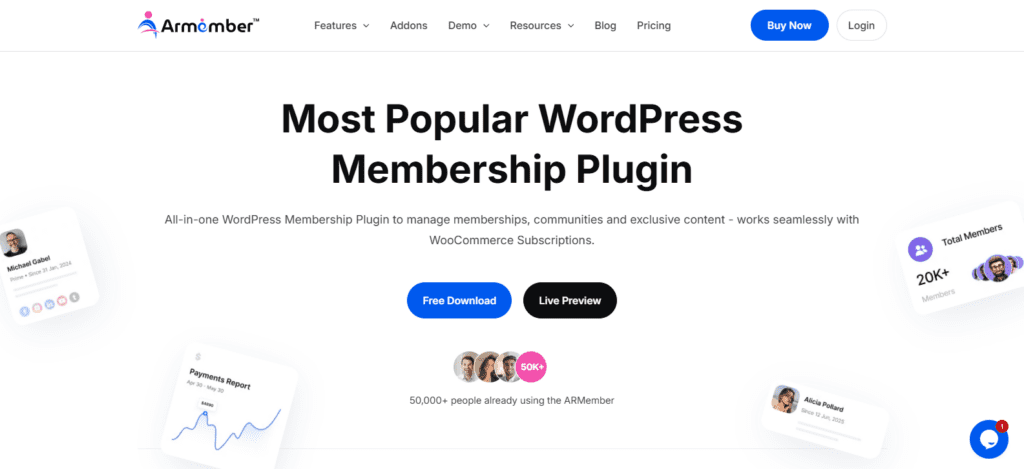
ARMember is an all-in-one membership subscription plugin. Trusted by thousands of online businesses for creating successful subscription models.
Main Features
- Unlimited membership plans and tiers
- Advanced content restriction
- Drip content rules
- Online courses creation
- 21+ payment gateways
- Custom billing cycles
- Member management and profiles
Pros
- Feature rich with over 57+ in-built addons
- Modern, user-friendly interface
- Flexible content restriction rules
- Tons of advanced integrations
Cons
- Complex setup for advanced features
- Limited built-in profile customization
3. Paid Memberships Pro
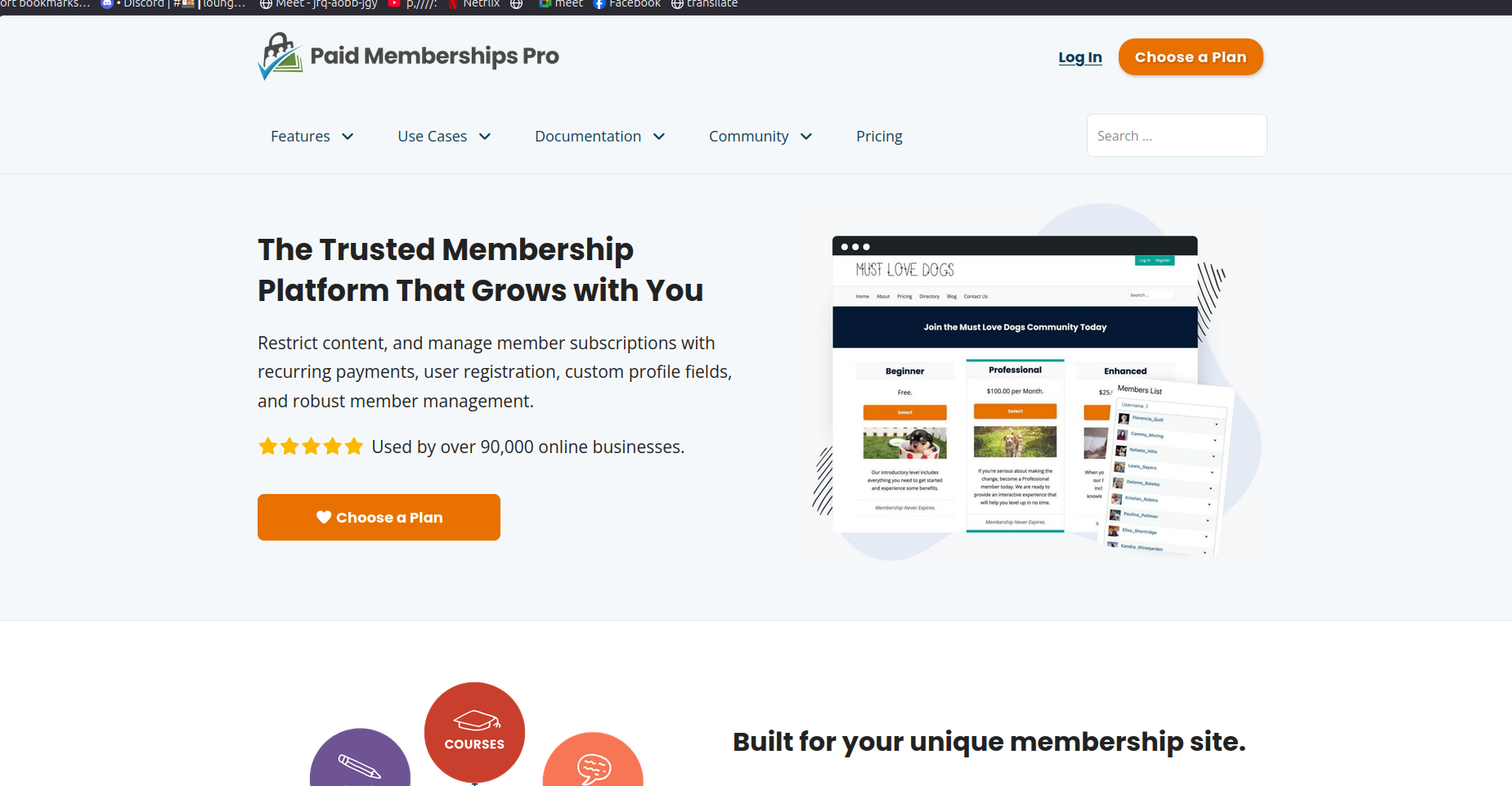
Built specifically for membership and course sites. Strong content-locking features out of the box.
Main Features:
- Multiple membership levels and tiers
- Drip content (release lessons over time)
- Content restriction by member role
- Free version with core features
Pros:
- Made for memberships, not just stores
- Free version is real and useful
- Drip content fits course delivery perfectly
Cons:
- Most useful features are in paid add-ons
- Setup takes longer than WPSubscription
4. MemberPress
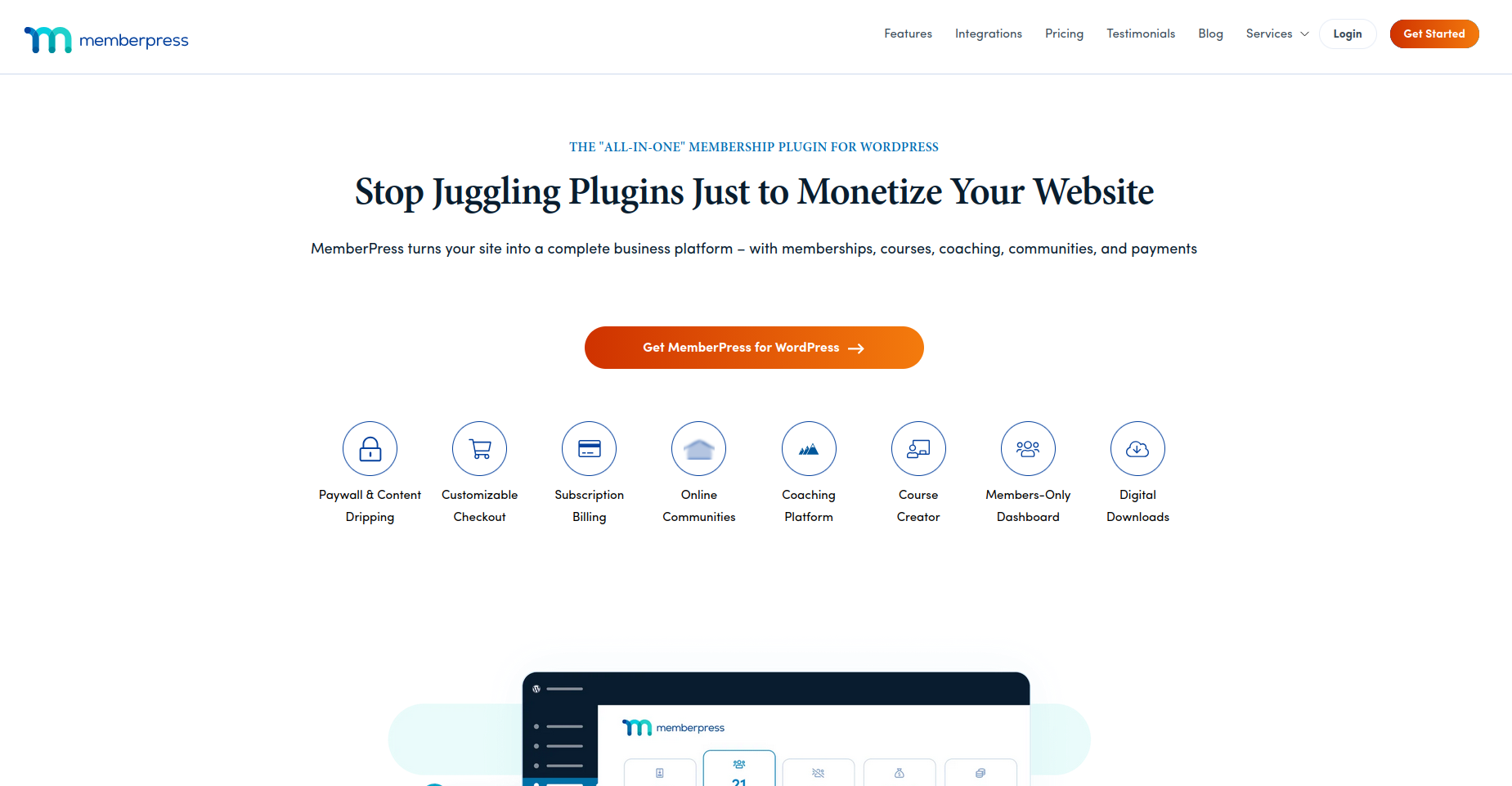
A top name for membership and course sites. Many big creators use it.
Main Features:
- Recurring billing and trial periods
- Content protection by member role
- Course builder built into the plugin
- Email and CRM integrations
Pros:
- Built for membership and course sites
- Strong content lock features
- Good set of integrations
Cons:
- Starts at $179/year, pricey for new creators
- No free version
5. WebToffee Subscription for WooCommerce
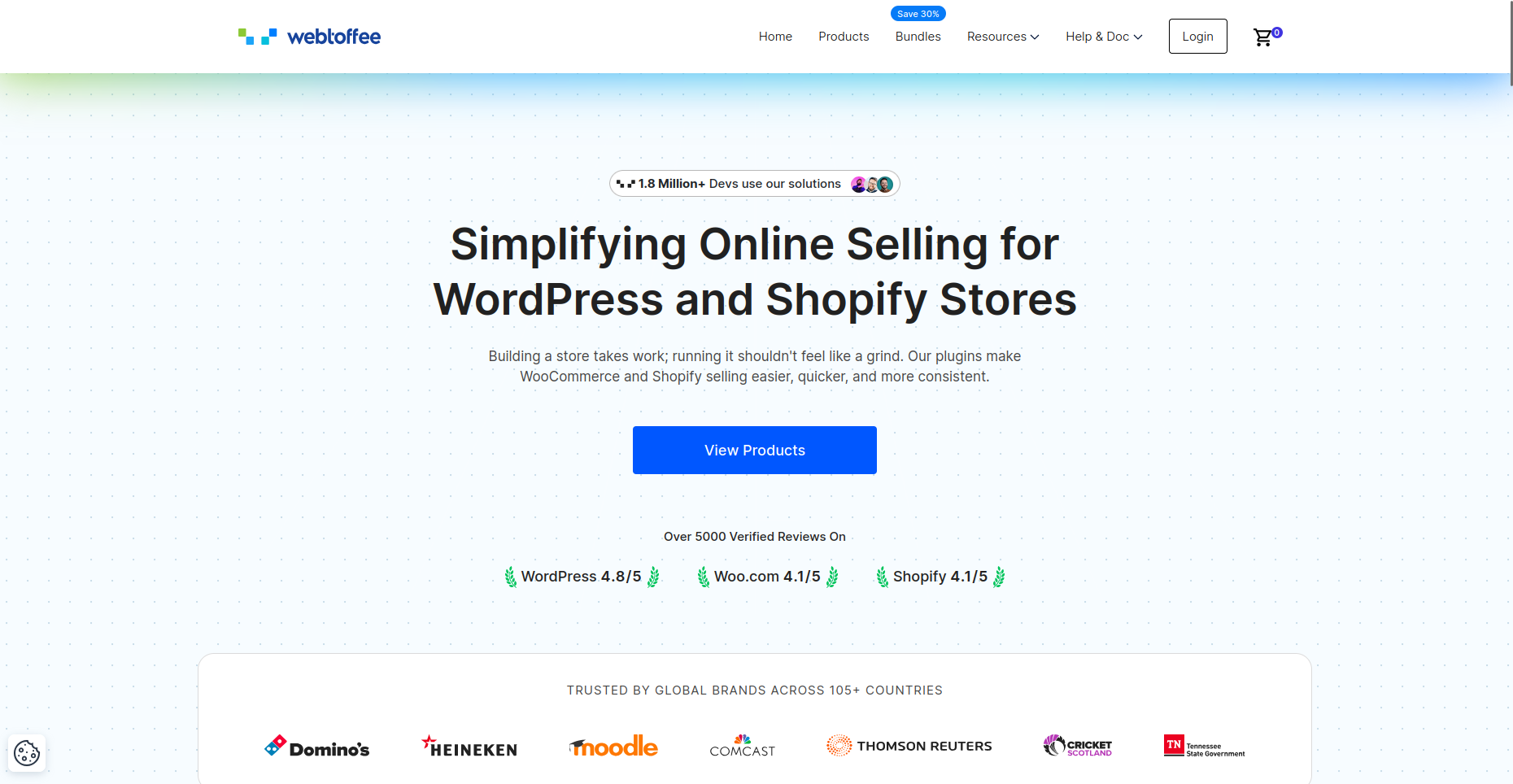
A trusted name in the WordPress plugin world. A good middle-ground pick.
Main Features:
- Recurring billing for any WooCommerce product
- Free trial and sign-up fee support
- Stripe and PayPal support
- Customer-facing dashboard
Pros:
- Trusted brand
- Fair yearly price (around $79)
- Clean admin dashboard
Cons:
- No real free version
- Fewer payment gateways than WPSubscription
6. WooCommerce Subscriptions
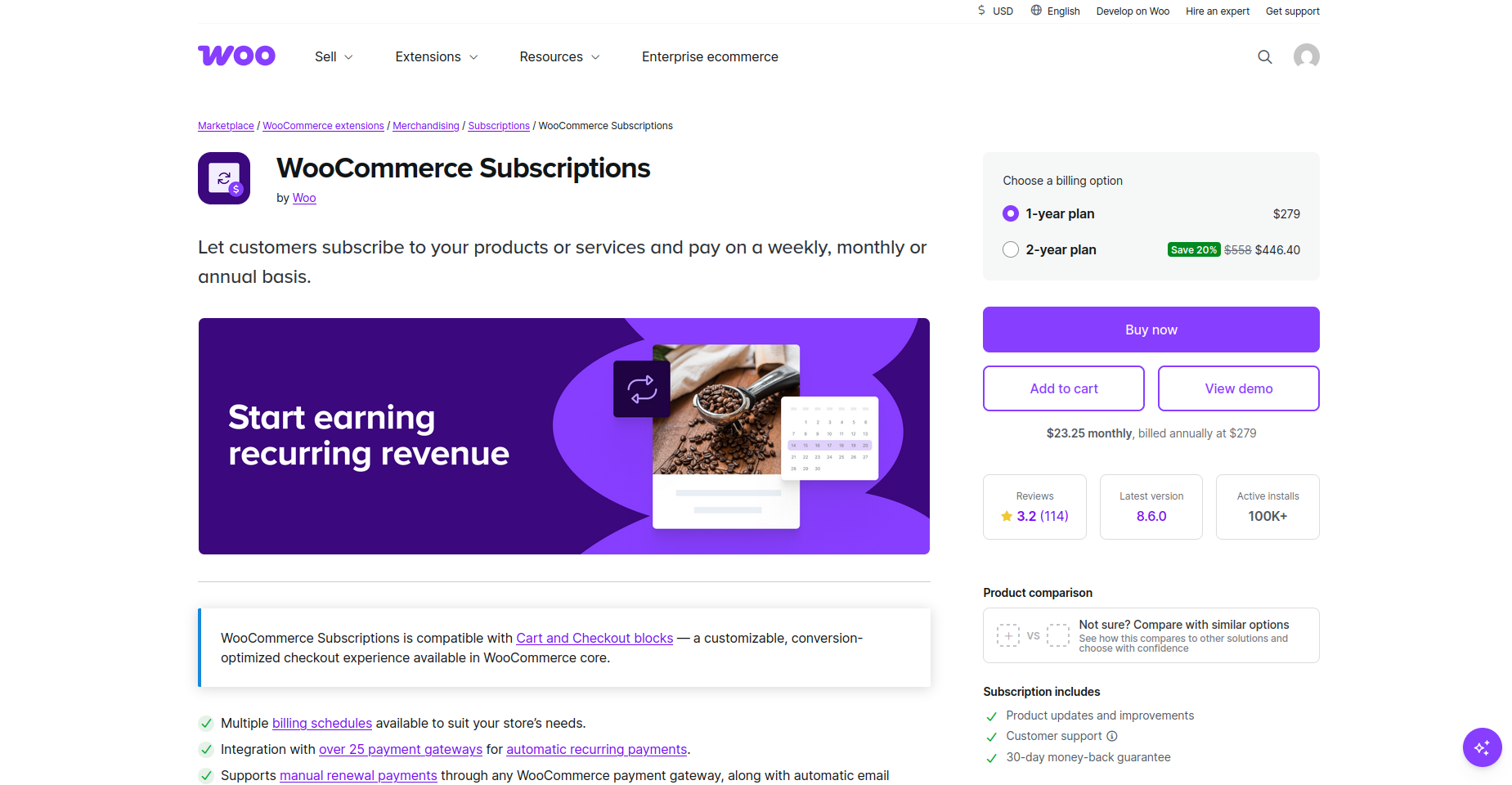
The official WooCommerce plugin is the most well-known name in this space.
Main Features:
- Full subscription support for any product
- Synced renewals (charge all members the same day)
- Variable subscription pricing
- Strong API for custom workflows
Pros:
- Built by the WooCommerce team
- Largest set of third-party add-ons
- Trusted by big stores
Cons:
- Pricey at $279 per year
- No free version
- Heavier setup than newer tools
Quick Compare: All 6 Plugins
|
Plugin |
Best For |
Pricing |
Free Plan |
Top Strength |
|
WPSubscription |
Small to mid-size course creators |
$69/year |
Yes |
Affordable + split payments |
|
ARMember |
Membership and subscription-style courses |
$79/Year |
Yes |
Complete membership toolkit |
|
Paid Memberships Pro |
Membership-style courses |
Free + paid add-ons |
Yes |
Drip content built-in |
|
MemberPress |
Established creators |
$179/year |
No |
Strong content lock |
|
WebToffee Subscription |
Mid-size creators on budget |
$79/year |
No |
Trusted brand and clean UI |
|
WooCommerce Subscriptions |
Big course stores |
$279/year |
No |
Most trusted name |
A Simple Cancel Path
Make canceling easy. Hidden cancel buttons make people angry. A clean cancel flow keeps trust high. Many people who cancel come back later, but only if you treated them well on the way out.
Common Mistakes to Avoid
Course creators experience identical obstacles that prevent them from making progress in their work.
Mistake 1: Pricing too low. $5 a month sounds nice, but the math doesn’t work. You need at least $19 to $49 a month to build a real business.
Mistake 2: Skipping the community. The course by itself does not provide enough value to keep students enrolled. Establish a Discord server and create Slack channels and private group spaces. Community is the glue.
Mistake 3: No new content for months. Subscribers will detect outdated material immediately. The schedule requires us to create one new lesson and conduct one live call each month.
Mistake 4: Treating it like a one-time launch. Subscription models for online courses need ongoing care. Users receive answers every day. The team members need to meet for their weekly scheduled meetings. The platform will release new content every month.
Mistake 5: Bad tech choices. A system failure during checkout and broken renewal emails immediately cause customers to lose faith in the business. You should select tools that function together smoothly while performing testing operations before beginning your deployment.
How to Move from One-Time Sales to Subscriptions
If you already have a course you sell once, here’s a simple plan to switch.
First, keep selling the one-time version. Don’t kill it. Some buyers prefer that.
Second, add a “monthly access” option at a smaller price. Like $29 a month for the same course, plus future updates, plus the community.
Third, watch the data. After three months, you’ll see which option pulls more revenue. Most creators see the subscription version win after month two.
Fourth, slowly raise the price of the one-time version. This nudges new buyers toward the monthly plan. Keep adding value to the subscription. New lessons. Live events. The promise of “more next month” is what keeps the recurring revenue flowing.
The Long-Term Win
Subscription models for online courses don’t just make more money. They change your stress level. When you know $20,000 will hit your account next month, no matter what, you can plan ahead. You can hire help. You can take a real vacation. You can build the next thing without the panic of “what if no one buys?”
That’s the gift of recurring revenue. It’s not just dollars. It’s freedom.
Final Words
If you’re a course creator stuck on the launch hamster wheel, take this seriously. Subscription models for online courses are not a fad. They’re the new normal.
Pick one of the three models we shared. Set up the right tools from the top 5 list above. Plan your monthly content. Build your community. And start small. Five subscribers is enough to test the waters.
In a year, you’ll have a real, recurring-revenue business that pays you whether you launch or not. In two years, you’ll have a system that runs even when you take time off.
Your courses are too good to sell once and let die. Turn them into a steady stream that pays you for years. That’s how online education businesses really grow.
Subscription Models for Online Course Creators – FAQs
Q1. Why should online course creators consider a subscription model over one-time course purchases?
A subscription model provides predictable, recurring monthly or annual revenue (MRR/ARR), which stabilizes cash flow and increases overall customer lifetime value (LTV). It also encourages continuous student engagement and community building compared to one-off sales.
Q2. What are the most popular types of subscription models for LMS websites?
The most effective models include All-Access Subscriptions (unlimited access to all courses for a recurring fee), Tiered Subscriptions (basic vs. premium access levels), and Membership/Community Subscriptions (combining courses with exclusive community perks and live sessions).
Q3. How do I prevent subscriber churn and keep students paying monthly?
To reduce churn, regularly release fresh content, offer exclusive community discussions, host live Q&A webinars, and use automated email sequences to re-engage inactive learners. Delivering ongoing value ensures students stay subscribed long-term.
Q4. Which WordPress tools do I need to launch a course subscription business?
You need a robust LMS plugin like Academy LMS paired with a recurring payment-enabled e-commerce solution such as SureCart or WooCommerce Subscriptions. This combination automates recurring billing, subscription management, and instant access control seamlessly.Why Academy LMS is Built for Course Subscriptions