









The online and virtual fitness market is valued at roughly $51.7 billion in 2026, projected to reach $138.7 billion by 2030 at a compound annual growth rate near 28%. People exercising at home instead of the gym isn’t a temporary shift anymore, it’s the baseline, and most of them still want the structure and accountability a trainer provides.
That demand is real, but so is the fact that the platform you build your business on determines how much of each dollar you actually keep. This guide walks through the steps to launch, with a specific focus on that decision, since it’s the one most guides either skip or get wrong.
Quick Answer: How do I start an online personal training business in 2026?
Why Online Training Works as a Business Model
Online personal training removes the one-client-at-a-time ceiling of in-person work. You can run virtual group sessions, sell on-demand programs students work through at their own pace, and price by ongoing access instead of only by the hour. And you’re no longer tied to one physical location, so your client pool isn’t limited to your neighborhood.
The trade-off is real too: building trust without in-person cues takes more deliberate communication, and you’re competing in a market with no geographic limit on your competitors either. The steps below are built around managing that trade-off, not pretending it doesn’t exist.
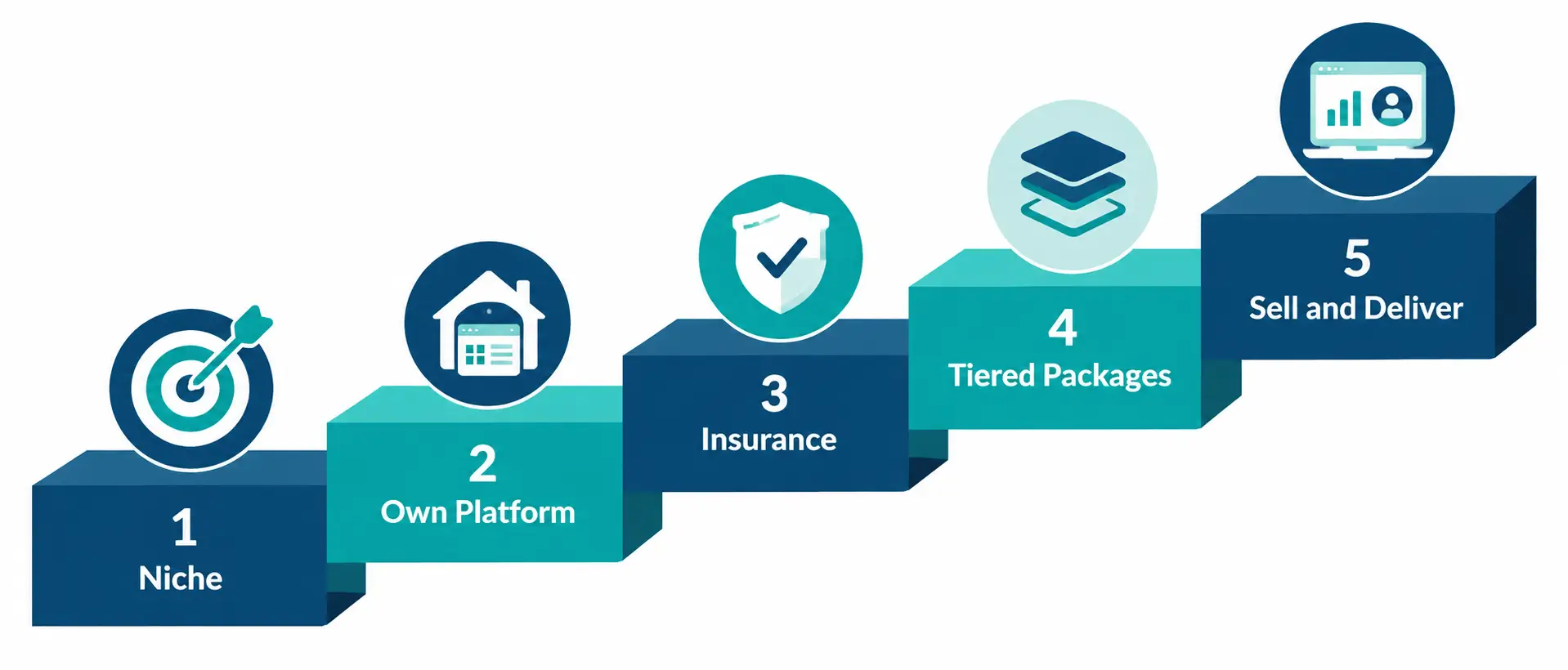
Step 1: Choose Your Niche and Target Client
Generic “online personal training” competes with everyone. A defined niche, postpartum strength recovery, training for a specific sport, mobility work for people who sit at a desk all day, gives you both a marketing angle and a reason a specific client picks you over a generic alternative. Research your target group’s actual pain points directly, through interviews or existing community conversations, rather than guessing.
Step 2: Build a Website You Actually Own
Selling exclusively through a third-party marketplace means competing against every other course on that platform, on that platform’s terms, for a cut of every sale. A WordPress site you control keeps the content, the client data, and the full revenue with you. The stack is simple: WordPress core, a hosting plan, and an LMS plugin to handle courses, enrollment, and payments.
Step 3: Set Up Insurance and Business Policies Before Your First Client
Liability and professional indemnity insurance matter for online sessions as much as in-person ones, since a client can still get injured following your program at home. Depending on your setup, it’s also worth insuring the equipment you use to deliver sessions (your computer, camera, and microphone), and putting written policies in place for cancellations, refunds, and program length so expectations are clear from the first sale.
Step 4: Package Your Training Into Tiers
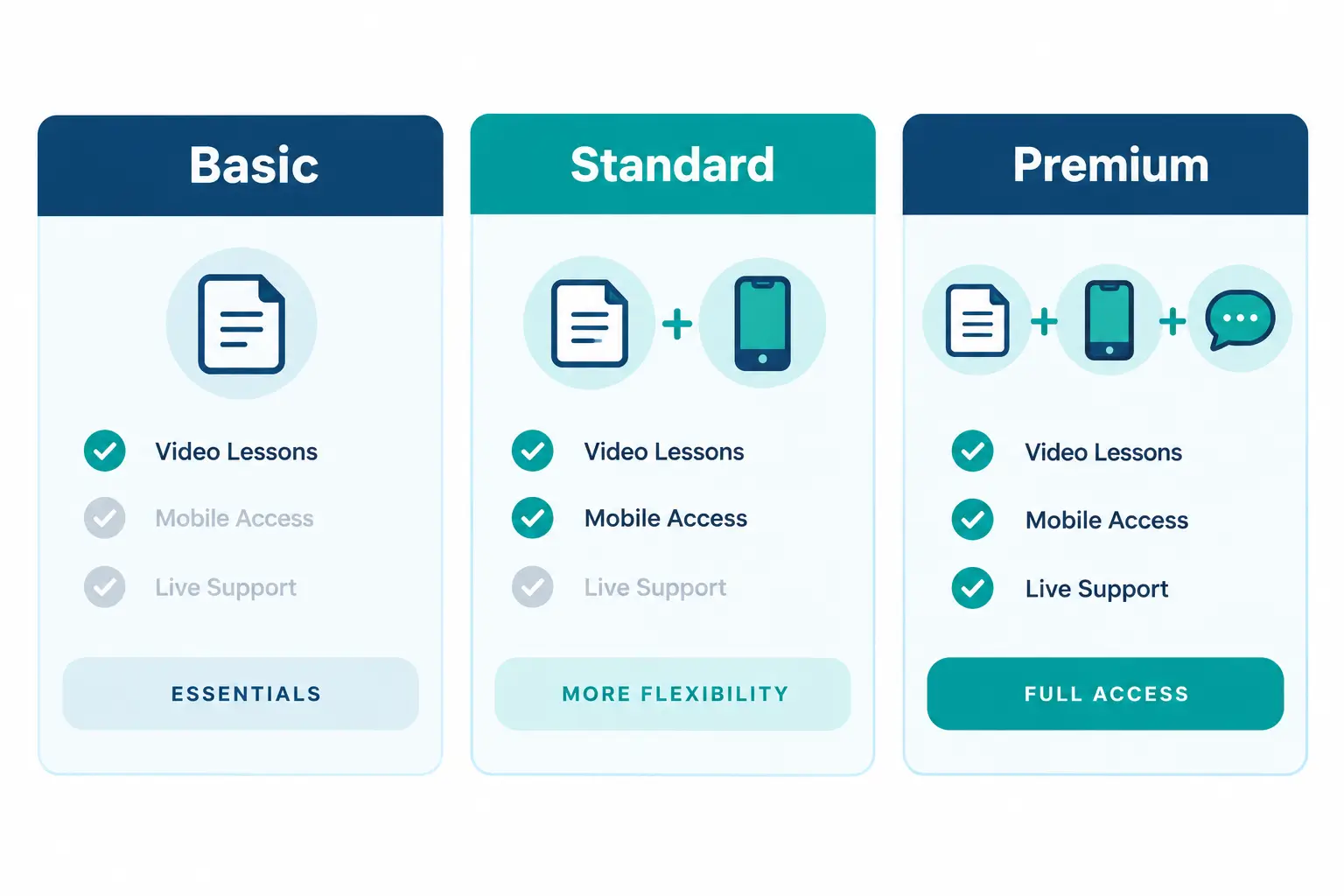
A single flat offer converts fewer prospects than a tiered structure. A common pattern:
Keep a backup retention path in mind too, most clients won’t renew a 3- or 6-month package automatically, so a membership or ongoing subscription option gives you a lower-friction way to keep them past the first package.
Step 5: Sell and Deliver Everything From One Platform
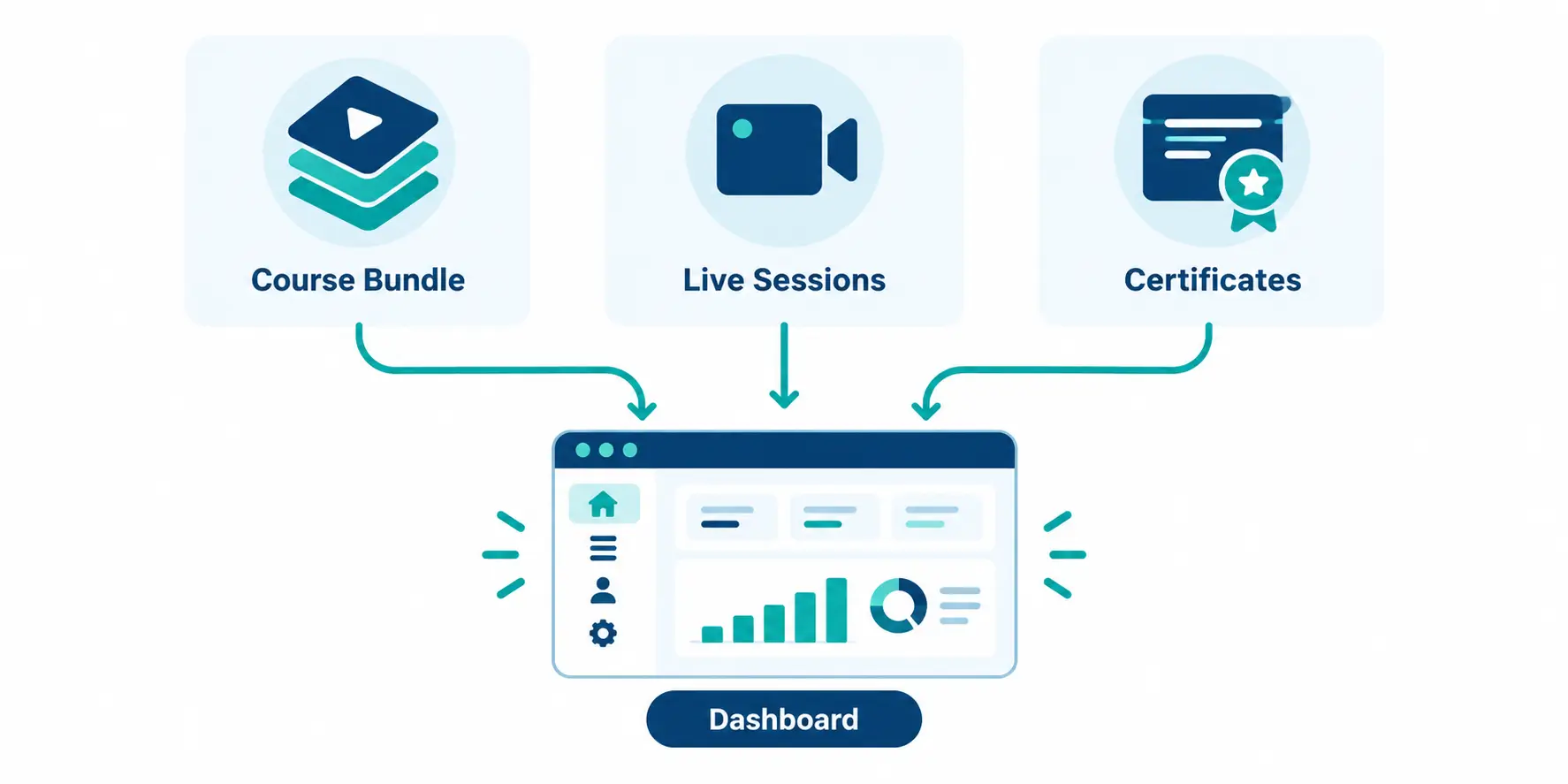
This is the step where the right plugin choice matters most, since it determines whether tiers, live sessions, and completion tracking live in one dashboard or across several disconnected tools. Academy LMS is built for exactly this kind of online coaching business on WordPress. Course Bundle lets you group programs into the Basic/Standard/Premium structure above, sold as one-time purchases, WooCommerce subscriptions, or memberships. Live Classes and Tutor Booking handle the higher tiers’ scheduled and 1:1 video sessions directly through Zoom or Google Meet integration, with availability managed in the same dashboard as your program content.
For clients who complete a structured program, the Certificate Builder issues a completion certificate automatically, useful as a retention and referral trigger (a completed program is a natural moment for a client to post progress and tag you). None of this requires stitching together separate scheduling, membership, and certification tools; it runs through the same plugin as your course content.
Step 6: Market Your Business
Common Challenges in Online Personal Training
Building trust without in-person cues is the most cited challenge, addressed mainly through more deliberate, frequent communication than an in-person trainer needs. Technical issues (a dropped call, audio glitches) are inevitable occasionally, so having a fallback plan, a recorded backup session or a quick reschedule policy, keeps a bad connection from becoming a lost client. Client accountability, without a trainer physically present, depends more on structured check-ins and visible progress tracking than it would in person.
Frequently Asked Questions
Do I need a personal trainer certification to start an online personal training business?
It’s not always legally required, but it’s strongly recommended. A recognized certification (NASM, ACE, ISSA, or similar) gives clients a credibility signal they can’t otherwise verify remotely, which matters more online than in person, where a client can at least observe your coaching directly.
How much can I earn running an online personal training business?
Income varies widely by niche, experience, and pricing model, but fitness instructors and trainers earn an average of roughly $27 an hour, or about $46,000 annually, in traditional employment settings. Trainers running their own tiered online business with subscription or membership pricing can exceed that by removing the one-client-at-a-time ceiling in-person work has.
Should I sell my programs on a marketplace or build my own website?
For anyone planning to build a long-term brand, your own website is the stronger choice. Marketplaces solve discovery quickly but take a revenue cut and put you in direct competition with every other course in the same category; your own WordPress site with an LMS plugin keeps full pricing control and client ownership.
What’s the best way to structure pricing for online personal training?
A tiered structure (a self-paced basic tier, a standard tier with scheduled check-ins, and a premium tier with live 1:1 sessions) converts better than one flat price, since it lets clients self-select based on budget and how much direct support they want.
Do I need insurance for an online-only personal training business?
Yes. A client can still be injured following your program at home, so liability and professional indemnity coverage matter for online delivery just as much as in-person sessions. It’s also worth insuring the equipment you rely on to deliver sessions.
How do I keep clients accountable without meeting them in person?
Structured, scheduled check-ins and visible progress tracking do most of the work that in-person presence would otherwise provide. Clear expectations set at the start (how often you’ll check in, what counts as completing a week) reduce the ambiguity that causes clients to quietly disengage.