








Employee development is crucial for competitive corporate learning and continuing education. To support varied learning styles and a self-directed learning approach, companies need the right lms that aligns training and development with business goals.
An effective learning management system offers many lms benefits: it acts as a centralized learning software to manage learning content, automates administrative tasks, tracks learning data, and supports blended learning and e-learning across mobile devices. Choosing the best learning management or type of lms lets organizations deliver personalized learning, customized learning paths, and comprehensive learning solutions for onboarding, compliance, and skill growth.
When considering lms implementation or to purchase an lms, evaluate features and benefits, lms pricing models, and the ability to create content. A good learning management system in the evolving lms market helps organizations scale training, meet learning needs, and modernize the learning process for effective employee training and long-term learning and development.
What is a Learning Management System (LMS)?
A Learning Management System (LMS) is a software platform that helps organizations create, manage, deliver, and track training programs for employees, students, or partners. It serves as a centralized hub where companies can host courses, learning materials, assessments, and certification programs.
Businesses use LMS platforms to organize employee training in a structured and scalable way. Instead of relying on physical training sessions or scattered resources, companies can provide online training materials so employees can access them anytime and from anywhere, maximizing the ROI of their learning and training investments.
Most LMS platforms include several core functions that help streamline the entire training process.
Course creation allows administrators to design structured training modules using videos, documents, quizzes, and interactive lessons.
Employee training management enables organizations to assign courses to specific teams, departments, or individuals.
Progress tracking helps managers monitor how employees are progressing through their training programs.
Certification management ensures employees complete mandatory training and receive certifications when required.
Together, these features help organizations deliver consistent learning experiences while maintaining full visibility into training performance.
Key Reasons Companies Should Implement an LMS

Centralized Training Management
One of the biggest advantages of implementing an LMS is the ability to centralize all training resources in a single platform.
Instead of storing training materials across emails, folders, and physical documents, companies can keep everything organized within the LMS. This centralized approach makes it easier for employees to find the information they need and for managers to maintain training programs efficiently, which is why many organizations need a learning management system.
Employees can quickly access courses, documents, and learning modules whenever they need them, enhancing their online learning management experience. Managers can also update content instantly without needing to redistribute materials manually, a feature that many LMSs offer to enhance efficiency.
Key benefits of centralized training management include:
- Consistent training across teams and departments
- Improved knowledge management
- Easy updates to training materials can be achieved using the LMS, ensuring content remains relevant and effective.
- Better organization of company learning resource
Centralized training helps ensure that every employee receives the same information, which improves overall learning consistency across the organization.
Reduce Training Costs
Traditional corporate training can be expensive. Companies often need to pay for professional trainers, travel arrangements, printed materials, and venue costs. These expenses can quickly add up, especially for large organizations with hundreds or thousands of employees.
An LMS significantly reduces these costs by shifting training programs online.
Employees can complete courses digitally without needing physical classrooms or external trainers, streamlining the learning and training process. Training materials can also be reused multiple times, which reduces the need for repeated investments in new resources.
Key cost-saving benefits of a learning management software include:
- Online course delivery
- Self-paced learning programs
- Reusable digital training materials
- Reduced travel and logistics expenses
Over time, organizations can save substantial amounts of money while still delivering high-quality training experiences through the use of an LMS for your organization.
Improve Employee Productivity
Well-trained employees tend to work more efficiently and confidently. When staff members clearly understand their roles, tools, and responsibilities, they can perform tasks more effectively and make fewer mistakes.
An LMS supports productivity by offering structured training programs that help employees develop the skills they need to succeed. Instead of waiting for occasional training sessions, employees can continuously learn and improve their capabilities.
Structured learning paths allow employees to progress from basic knowledge to advanced skills, which encourages ongoing professional development.
Benefits of improved training include:
- Faster skill development is one of the primary benefits of a learning management system.
- Higher job performance
- Improved work efficiency
- Greater employee confidence
As employees gain knowledge and experience through LMS training, they become more capable contributors to the organization’s success
Track Employee Progress and Performance
Another major benefit of using an LMS is the ability to track training progress and employee performance in real time.
Managers no longer need to rely on manual reports or guesswork to determine whether employees have completed their training, thanks to the management software that tracks progress automatically. Instead, the LMS automatically records learning activities and generates detailed reports, enhancing the overall elearning experience.
Organizations can track multiple aspects of employee training, including:
- Course completion rates can be effectively monitored through the LMS, ensuring that employees are engaging with the elearning content.
- Quiz and test scores
- Certification status is easily tracked within the LMS, providing a clear overview of employee progress in their online training.
- Learning engagement levels
These insights allow managers to identify skill gaps, measure training effectiveness, and make informed decisions about future learning programs.
With better visibility into employee progress, companies can ensure that training initiatives actually contribute to workforce development.
Simplify Employee Onboarding
Onboarding new employees can be a time-consuming process for many organizations. Without a structured system, new hires may receive inconsistent training or miss important information during their early days.
An LMS simplifies onboarding by providing standardized training programs for every new employee.
New hires can complete onboarding courses online, learning about company policies, tools, workflows, and expectations at their own pace. This approach ensures that every employee receives the same foundational knowledge, which is crucial for effective onboarding in an online training environment.
Benefits of LMS-powered onboarding include:
- Faster employee integration
- Consistent onboarding experiences
- Reduced HR workload
- Better knowledge retention for new hires is achieved through gamification techniques integrated into the LMS.
By streamlining onboarding, companies can help new employees become productive much faster.
Support Remote and Hybrid Workforces
As remote and hybrid work models continue to grow, businesses need training solutions that work beyond traditional office environments.
An LMS makes it possible for employees to access learning materials from anywhere in the world. Whether employees work remotely, travel frequently, or operate in different time zones, they can still participate in training programs without disruption.
Advantages of LMS-based remote learning include:
- Mobile-friendly training access
- Flexible learning schedules
- Scalable global training programs
- Consistent training for distributed teams
This flexibility makes LMS platforms ideal for modern companies with remote or international workforces.
Ensure Compliance and Certification Training
Many industries require employees to complete mandatory training programs to meet regulatory standards. These may include training related to workplace safety, data security, or industry-specific regulations.
Managing compliance training manually can be extremely difficult, especially for large organizations.
An LMS simplifies compliance management by tracking certifications and automatically recording training completion.
Organizations can also schedule recurring training programs and send automated reminders when certifications are about to expire, utilizing the full capabilities of the learning management software.
Key benefits include:
- Reliable certification tracking
- Automated compliance reminders
- Organized training records
- Reduced risk of regulatory violations
This ensures that companies remain compliant with industry requirements while maintaining accurate documentation.
Key Features to Look for in an LMS
When choosing a Learning Management System, businesses should evaluate several important features that support effective training programs.
Course builder:
A flexible course creation system allows organizations to build engaging training modules with videos, quizzes, and interactive lessons.
Progress tracking:
Tracking tools help managers monitor employee learning progress and identify areas where additional training may be needed.
Reporting and analytics:
Detailed reports provide insights into course completion rates, learner engagement, and overall training effectiveness.
Certificates:
Certification features help organizations issue official training certificates and track compliance requirements.
Mobile learning is one of the lms features that enables employees to learn on the go.
Mobile-friendly platforms allow employees to access training on smartphones and tablets, making elearning more accessible than ever.
Integration with business tools:
Integration with HR systems, CRM platforms, or other software ensures smooth data management across the organization, enhancing the overall effectiveness of the LMS for your organization.
Selecting an LMS with these features ensures that companies can build scalable and efficient training systems.
Why Businesses Choose Academy LMS
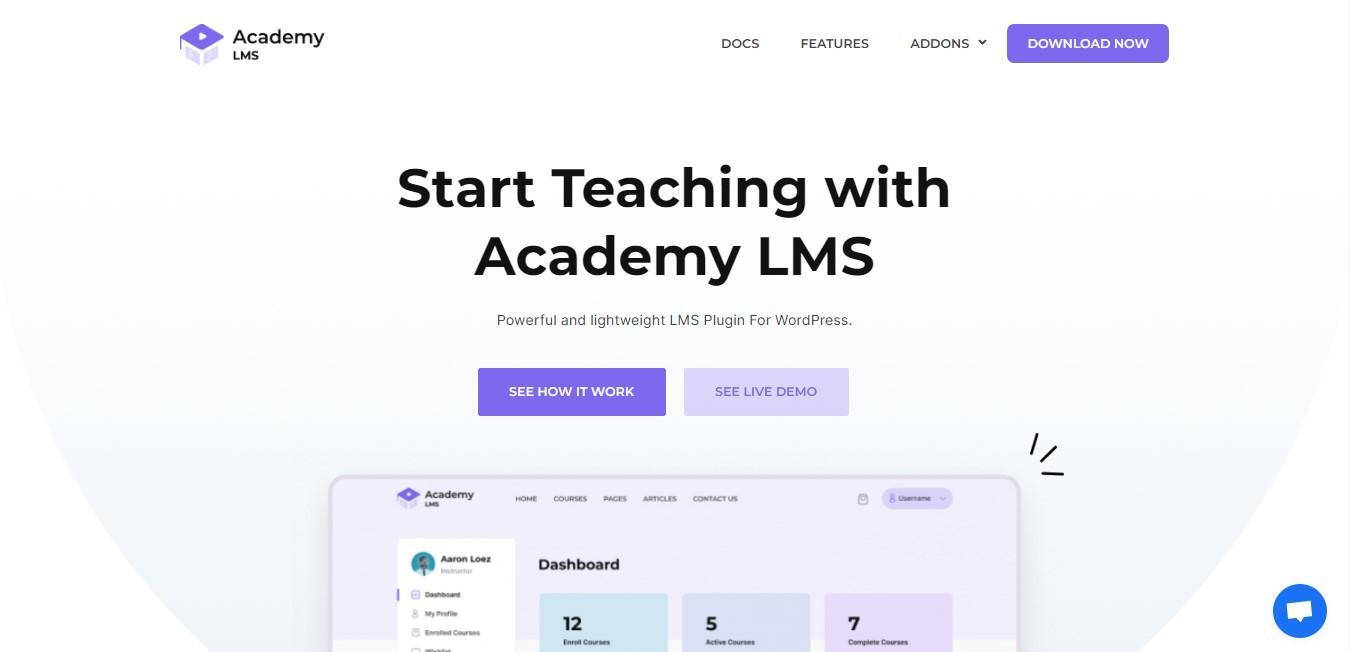
For companies using WordPress, Academy LMS provides a powerful and flexible solution for managing employee training and online learning programs.
Academy LMS is designed to simplify course creation while giving businesses full control over their learning platforms.
Organizations can easily build structured training programs using an intuitive course builder. Administrators can manage employee training, assign courses, and monitor learning progress from a centralized dashboard.
The platform also offers detailed analytics, allowing companies to track course completion, learner engagement, and training performance.
Because Academy LMS integrates directly with WordPress, businesses can create scalable learning platforms without complex development or expensive infrastructure, leveraging the benefits of a learning management system. This makes it especially attractive for companies that want a flexible and cost-effective training solution.
With its powerful features and user-friendly interface, Academy LMS helps businesses modernize their training programs and build effective learning ecosystems, offering a customizable online training solution.
Conclusion
Employee training is no longer optional for businesses that want to remain competitive. Organizations must continuously invest in skill development, knowledge sharing, and workforce growth.
A Learning Management System provides a practical solution for managing modern training programs. By centralizing learning resources, reducing training costs, improving productivity, and supporting remote workforces, LMS platforms help companies build efficient and scalable learning environments.
They also simplify onboarding, provide valuable performance insights, and ensure compliance with industry regulations.
For businesses looking to improve training efficiency and empower their employees, implementing an LMS can be a transformative step, especially with features like leaderboards and gamification that customize the learning experience. With the right platform in place, companies can create a culture of continuous learning that supports long-term success and organizational growth.
FAQs: reasons why implement an lms for a company
How does LMS adoption improve employee productivity?
Implementing an LMS streamlines onboarding, enables microlearning, and delivers role-based curricula that accelerate skill acquisition and reduce time-to-competence.
Can an LMS support compliance and risk management?
Yes. An LMS provides audit trails, automated certification renewals, and policy acknowledgment workflows to ensure regulatory adherence and mitigate organizational risk.
What scalability and analytics benefits will we gain?
Modern LMS platforms offer cloud scalability, cohort management, and learning analytics dashboards that track ROI, engagement, and competency gaps for strategic workforce planning.